By Steve Hammons
Recent, current and upcoming movies on stories related to UFOs, off-Earth civilizations and how humans fit into the situation continue to emerge from Hollywood.
A few examples include Aliens in the Attic, a kid-and-family-friendly movie released in July. Planet 51, scheduled to open in November, is an animated film and another one for kids and families.
The dark and introspective District 9 hit theatres in August and seemed to strike a chord with audiences and critics. The Fourth Kind, dealing with abductions of humans, takes the genre to a different level and audiences can check it out beginning this November.
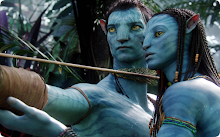
James Cameron’s Avatar, due out in December, is already creating a buzz and promises to be visually exciting and thought-provoking.
And Curmudgeon Films recently obtained the rights to the story of an alleged Area 51 scientist for a movie project tentatively titled S-4: The Incredible True Story of Bob Lazar.
MEDIA AND ACCLIMATION
Are these films and many other creative works helping people prepare psychologically and emotionally for possible significant developments regarding UFOs and encounters with non-human and/or human-related beings from elsewhere?
To explore this question, we do not necessarily need to believe that UFOs and non-human or human-related civilizations are involved here on Earth. However, most people would say this is possible. Some people say it is probable. And others claim that it is a reality – a reality we need to deal with.
For people who are interested, the study of such situations is challenging. There seems to be much speculation and misinformation.
There also appear to be very interesting and well-researched documents, witness testimony and strong circumstantial indications that something along these lines has been going on.
In the mid-1950s, Walt Disney was reportedly approached by the U.S. Air Force and development of a documentary film about visitation of aliens to Earth was allegedly started. However, the plug was pulled on this project.
In subsequent decades, many “fictional” movies and TV shows did emerge that dealt with this topic in various ways. This trend continues now.
People can speculate about if this is an organized acclimation effort to prepare Americans and people around the world for an unconventional situation, or if it is just the creativity, imagination and money-making sense of the movie and TV businesses.
Either way, it is probably true that kids, teens and adults are today more prepared for the possibility or reality of the existence of non-human or human-related extraterrestrials, beings from other dimensions or similar kinds of unconventional scenarios because of movies, TV shows and books on these subjects.
SPECIAL SCENARIOS
Much has been written and discussed about the so-called “Majestic” or “MJ-12” group of experts reportedly formed after the Roswell incident.
Fewer people probably have heard of the alleged U.S. Army Counterintelligence Corps “Interplanetary Phenomenon Unit (IPU),” which, it is claimed, may have been active even before the Roswell case, due to previous intelligence about unconventional situations.
Reports of activities like these could indicate that, as part of dealing with a complex scenario, U.S. leaders realized that the American people would need to be informed and prepared in some way that did not cause undue social or other problems.
Indirect methods such as movies, TV programs, books and other creative endeavors would naturally be resources that could accomplish this. The close bonds formed between Hollywood and the defense community during World War II could have been leveraged to deal with this new challenge.
It will be interesting to see where this goes.
Some of the recent and upcoming movies, like those before them, take a good, hard look not only at “aliens,” but also at ourselves – the human race. This seems to be a necessary part of acclimation about how we might interact with or respond to encounters with others.
The scenario of human contact with more advanced civilizations is often compared to the experience of Native American Indians who encountered the technologically more advanced Europeans beginning in the 1500s until the “conquest” of what is now the western U.S. in the late 1800s.
The Native American Indian tribes, cultures and civilizations suffered quite a bit from this interaction. This is an understatement.
Would this happen to our own human cultures in the face of a technologically-superior race from elsewhere? This is a question that has been carefully considered by many researchers.
BE PREPARED
Preparing ourselves for the possibility or reality of contact like this seems to be wise. Being prepared for possible situations of many kinds is usually a good idea. This can enhance safety and the chances for good outcomes.
Movies, TV, books and other kinds of creative activities have an important part to play in these efforts. They help us explore and consider various possibilities. They prepare us psychologically, emotionally and spiritually, as well as forming common perceptions among us that might be helpful.
Of course, there are other unusual and thought-provoking subjects that may be both related to, and somewhat independent of, the topics of UFOs and visitors.
These include leading-edge thoughts and scientific research into teleportation, time travel, anti-gravity methodologies, advanced human perception, life after death and similar kinds of subjects. Plenty of movies and creative works have tackled these topics too, often with great results.
I like to think that my own two novels, Mission Into Light and the sequel Light’s Hand, as well as the subsequent movie screenplay and two TV pilot scripts based on them, help move the ball forward in these areas.
The books tell the story of the “Joint Reconnaissance Study Group,” a San Diego-based U.S. joint-military service and intelligence team of ten women and men who are tasked with conducting special research and operations. The novels bring readers and viewers into the inner workings of this special activities group as they explore different kinds of mysterious phenomena and the connections between them.
My adaptation of the books to a movie screenplay and a one-hour TV pilot, both closely based on the novels, might also spark interest along the way.
A two-hour TV pilot written by two other screenwriters, based more loosely on my novels, is also a good example of using the TV media to entertain and inform. With the help and guidance from a highly-qualified science advisor, we made sure that our concepts were sound.
Maybe one day these projects will make it to the big or small screen. It would be rewarding to think that these works could contribute not only to the body of worthwhile film and TV projects, but also help somewhat in the larger situations we might face.
Monday, August 31, 2009
Movies on UFOs, other worlds help public acclimation?

Friday, August 14, 2009
Healthy, safe living should be part of national discussion
By Steve Hammons
America, heal thyself.
As debates about
personal, family, community and national health continue, there have been
limited discussions regarding physical fitness, healthy living, safety
education and personal responsibility.
For example, the
challenge of overweight and obese adults, teens and children in the U.S.
appears to be just one of many areas where low-cost or no-cost solutions are
within reach. Heart disease, diabetes and a multitude of other health problems
are linked to the overweight and obesity epidemic in the U.S.
And while many Americans
have begun physical exercise activities, changed their eating habits and
improved their physical fitness, millions still have not.
The overweight and
obesity dilemma, though ultimately linked to personal behavior, also ties in
with family and community attitudes and support systems.
Similar factors can be
seen regarding tobacco smoking and unsafe behaviors that lead to different
types of health problems and accident injuries.
FELLOWSHIP OF THE GYM
Behavior, healthy or
unhealthy, flows from within. Attitudes, motivation, personal history,
self-image, personality and other elements can play large parts in
health-related action or inaction.
Knowledge and
information about healthy living are also key. Support systems of friends,
family or other associates can also be important factors.
When it comes to
physical fitness, many people find that participation at a gym, fitness club,
community center, YMCA, Boys & Girls Club or other facility helps them
get and stay motivated to exercise and continually improve their fitness
levels.
Being around other
people who are participating in health and fitness activities can be helpful.
At today’s fitness centers, all ages of people can be seen on the treadmill or
work-out machines. Young and middle-aged adults, grandparents and teens are
often exercising together.
Some people say that
this environment of common purpose – exercising and getting or staying in shape
– can contribute to a unique sort of fellowship and mutual support. Finding a
work-out buddy or buddies can also provide motivation and make exercising more
fun. These buddies can be friends or family, co-workers or teammates.
If a formal facility is
not available, there are many other options such as walking, stretching, jogging, hiking, bike riding or lifting weights with simple dumbbells (no, we’re not referring
to your work-out buddies). Various other kinds of exercise and sports
activities also can be fun and motivating.
In addition, some
research indicates that moderate and vigorous exercise can help relieve stress,
improve sleep, decrease anxieties and improve mood.
And then there is the
personal satisfaction to be gained by setting a goal and doing your best to
work toward that goal. When it comes to health and fitness, this can be
particularly rewarding.
HEALTHY AND SAFE
Many of the same factors
that apply to physical exercise and fitness are also in play regarding tobacco
use, unhealthy eating and unsafe behaviors that can contribute to ill-health or
accident injuries.
Ceasing tobacco use can
be accomplished, though it reportedly is difficult. Certain aids such as
nicotine gum and patches are available to make success more likely.
Healthier eating is not
rocket science. Less junk food, more fruits and vegetables. Lean meats
including chicken and fish. Smaller portions. Some people suggest smaller
meals, but more frequent meals every couple of hours or so. There are plenty of
healthy eating ideas out there that seem to make sense.
When we look at accident
injuries, sometimes we find that risky behaviors caused or contributed to the
injury. On the other hand, sometimes the causes are situations and risks that
are a natural part of life, such as playing sports or simply getting out of
your shower and slipping on a wet floor.
However, by increasing
safety education and awareness, many accidents can be prevented.
For example, falls are a
primary cause of injuries to children, including serious injuries that require
treatment at a hospital emergency department or trauma center. Although
children will always take spills, many serious falls are probably preventable
by common-sense adult supervision and educating children about the dangers of
certain behaviors.
Families, schools,
neighborhoods and communities have many options to teach kids about things like
falls, bicycle safety, crossing busy streets and similar basic safety
education. Local fire and police departments often provide personnel to visit
schools and provide these kinds of orientations for kids.
The list goes on and on
about the dozens of steps that can be taken to improve the health and safety of
all Americans. Most of them only require common sense and a determination to do
what is needed to get and stay healthy and safe.
Subscribe to:
Posts (Atom)