By Steve Hammons
On July 24, 2009, White House spokesman Robert Gibbs responded to a caller’s question on C-SPAN about UFOs.
The caller, identified as “Ryan from Seattle,” noted that a wide range of Americans are calling for more transparency on the UFO situation.
Gibbs said he took the question seriously but stated he had not been briefed on the topic and has not talked with President Barack Obama about it.
Will the time come when a more formal government statement about UFOs is appropriate? Or, will “disclosure” continue to gradually emerge through indirect, vague and discreet methods?
As the public information officer for the Obama administration, Gibbs could be involved in helping develop talking points on this subject.
COMPLEX AND SENSITIVE
It is undoubtedly a complex and sensitive matter. According to some reports, past U.S. presidents have received only limited briefings on the subject. Presidents don’t always have a “need to know.”
Likewise, there is a view that the general public does not have a need to know. In fact, some elements of the situation could be troubling for the public. In addition, there is probably much that the U.S. government and other governments internationally do not know or do not fully understand.
As a result, there may be a legitimate view that it is best if a formal statement on the status of the UFO situation does not occur and that people inquire and discover information about this subject on their own.
Of course, movies and TV, books and articles, and other kinds of media platforms often serve to inform us and get us thinking about the possibilities involved.
This “grassroots” kind of emerging awareness might have significant advantages over a “top-down” announcement from government officials. That said, recent releases of reports and documents by various international governments have been interesting and informative.
When dealing with such an unconventional situation, maybe the standard kinds of governmental public statements are not the most effective and appropriate means to communicate with the public. It might be very challenging for any president or his administration to handle such a delicate, complex and important task.
But, just for a moment, let’s guess how someone like Gibbs might handle such a public announcement.
PRESS BRIEFING
“Good morning. You know, we get inquiries from Americans on many kinds of topics, and we try to be as responsive and open as possible.”
“As you are aware, President Obama is interested in government transparency and being as straightforward with the American people as we can be, while respecting the need for discretion at times.”
“One of the interesting subjects that some Americans ask about is the topic of UFOs and what the U.S. government might know about them. We want to try to address this question to the best of our ability, but you should consider my comments today as a preliminary introduction, with more follow-up at a later time.”
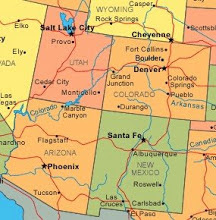
“In the summer of 1947, something crashed in the region near Roswell, New Mexico. Local public safety officials and U.S. Army Air Forces personnel from the nearby base responded to the scene. It was quickly determined that this was an aircraft or spacecraft of some kind that was piloted or occupied by apparently intelligent beings who were not humans.”
“At the time – immediately following the end of World War II and the beginning of the Cold War – it was decided that it was very important to maintain the secrecy of this event, as scientists and others tried to determine what was going on and how to handle it.”
“In the years and decades since the so-called ‘Roswell incident,’ much more has been learned. However, our knowledge and understanding of the situation is still incomplete, and we are learning more all the time.”
“There are some details of the history and current status of this subject that we will be able to brief you on in the coming months. However, some aspects must and will remain classified until such time as it is determined that releasing such information is in the best interests of the American people and the United States of America.”
“I can say that maintaining the safety and security of the United States and all Americans continues to be a top priority for this administration, whether we are talking about terrorists, natural disasters or any other kinds of scenarios that might present themselves.”
“We encourage Americans to maintain open minds, and also maintain a healthy skepticism, about various reports, claims, rumors and perceptions on this interesting and complicated subject. There is a lot of material and information out there about this subject – some of it reliable and some of it inaccurate.”
“Americans can rest assured that your government is doing all it can to handle the many aspects of this situation in the most responsible way possible, working with experts from many fields, both nationally and internationally.”
“I won’t be taking follow-up questions on this today. And, as I mentioned, I hope to be able to provide more information to you in the coming months.”
Monday, July 27, 2009
UFO disclosure: What should Obama say?
Thursday, July 23, 2009
Arrest incident is complex for Gates, Crowley, Obama
By Steve Hammons
OPINION, COMMENTARY AND ANALYSIS
The disorderly conduct arrest of Harvard professor Henry Louis Gates Jr. by Cambridge, Massachusetts, police Sgt. James Crowley raises many interesting issues that are probably worth exploring.
President Barack Obama's recent comment that Crowley may have acted "stupidly" also seems worthy of examination.
What were the psychological, social, legal and other dynamics in play on the night of Gates' arrest?
Let's start in chronological order.
HUMAN NATURE
First, Gates was reportedly returning to Cambridge from a trip to China after working on a project there. This undoubtedly was a long and tedious airline flight. Getting through airports is also sometimes a tiring and even stressful experience.
Finally, a possibly fatigued Gates arrives home, probably ready for a good night's sleep. What does he find? The front door of his Harvard-owned home won't open. He and his taxi driver try to force it open and eventually gain access to the residence.
A neighbor or passerby sees two men who seem to be possibly trying to force open the door. She apparently feels a crime might be occurring, calls police, and describes the situation to them, probably to a police dispatcher.
Crowley is one of the officers who responds to the scene of a possible break-in. The residence has reportedly been previously broken into recently.
Crowley is prepared to possibly confront an intruder, burglar or some other kind of criminal – possibly a dangerous criminal.
Undoubtedly, Crowley was assertive when he confronted Gates. He asked who Gates was, what was he doing there and similar questions.
Was Crowley overly confrontational? Was he initially adversarial? Possibly. When questioning a possible suspect, is it natural to be assertive and confrontational? In some cases, probably.
Meanwhile, Gates is already tired and annoyed about his front door. Now, a peace officer is being confrontational. Could Gates' fatigue from a long flight and frustration about his door have played a part in his response? Maybe.
Due to the long flight and fatigue, could his inhibitions have been altered, causing him to be more irritable? Possible, and understandable.
SITUATION ESCALATES
Gates reportedly brought up the issue of racism with Crowley in their verbal exchange. Is it possible that Crowley had some kind of unconscious bias that played a part? Yes, it's possible.
Is it possible that Gates mistakenly perceived Crowley's actions and demeanor as racial when they were not. That is also possible.
Apart from the issue of Gates being African-American, he is a highly-paid Harvard professor, highly educated and apparently well connected. And, undoubtedly in his life, he has received disrespect of various kinds, including race-related disrespect.
He also studies racial prejudice for a living and it is the focus of many of his scholarly and other activities. You could say it is a focus of his concerns and consciousness.
Apart from his ethnic background and academic focus, could Gates have developed an attitude sometimes associated with well-to-do, successful and prominent people? That is, sometimes "big shots" develop certain attitudes. Is this a factor with Gates? Could be.
Gates certainly makes more money, has a more advanced educational background and a more prestigious position than Crowley. How did this affect the situation?
And what about Crowley? What is his tolerance level for citizens or suspects who are not as cooperative as they could be? In the case of disorderly conduct, this is somewhat of a judgment call, although there are also legal criteria that describe and define it.
Did Crowley resent being called a racist by Gates? Recent reports quote Crowley as saying Gates made a comment about Crowley's mother? Is this true? Did it further escalate the situation? Did it push Crowley's buttons?
OBAMA WEIGHS IN
In wades Obama. Insert foot in mouth.
He correctly notes that some African-Americans and other minorities have been historically treated unfairly in our social and legal systems. That is putting it mildly. For that matter, many people of various backgrounds have been treated unfairly.
The public safety and criminal justice systems, including the role of peace officers, are important elements involved.
Having had several different kinds of encounters with peace officers over the years, in positive and not-so-positive situations, I can say many types of problematic factors can influence these kinds of scenarios.
Obama notes that he wasn't on the scene. He adds that he is probably biased because he knows Gates personally.
Then he said Crowley acted stupidly by arresting someone in their home.
Sir, people in their own home are arrested all the time. Many crimes take place in people's homes, including quite terrible crimes.
Besides, Gates was not arrested for being in his own home, he was arrested for disorderly conduct, including outside of his home.
As a strong supporter of Obama, I would conclude that he erred in his statement and a clarification would be helpful. For him to alienate me somewhat takes some doing – yet, he has done so to a degree with his comments.
Obama surely knows that while racial injustice is undeniable, there are also cases where people (of all ages, backgrounds, etc.) may consciously or unconsciously set themselves up to be "victims" for one reason or another. Could this be a factor in the Gates-Crowley incident? It's possible.
In addition, people from all kinds of backgrounds can behave inappropriately at times, and for various reasons in different kinds of circumstances. This may include minor or serious criminal behavior.
Do "big shots" sometimes engage in these kinds of problematic behaviors? Obviously, this is true. This is not to say that Gates necessarily behaved in this way. It is unclear.
LESSONS LEARNED
What can be learned about this incident? One element that seems educational is to increase our understanding of the position of peace officers in society.
They face danger and potential danger constantly. They must be assertive and take control of the situation at hand.
Officers can sometimes exceed their authority, be unfair, mistaken or even corrupt.
They are also human and many peace officers are honorable and decent people with rich and diverse life experiences.
They deal with hostile citizens all the time.
At a moment's notice, they must be prepared to use lethal force to protect or take human life, or sacrifice their own.
Is it necessary to kowtow or humble yourself before a peace officer? No. But simple human decency and respect go a long way. It cuts both ways.
Communication substance and manner are key factors. Can the assertive approach of a peace officer be interpreted, or misinterpreted, as disrespect? Yes.
In an interaction between a peace officer and a citizen, cooperation and communication can be helpful, if not crucial. Even an initially adversarial encounter can evolve into a constructive interaction if the people involved handle it, and themselves, appropriately.
What if a white Harvard professor, tired and irritable, had been confronted by an officer (white or minority) in the same way? Might he have also been troubled or irritated by the officer confronting and questioning him? Could be.
Are Gates and Crowley spinning their accounts and reports of the situation? Are they telling it as they truly believe it happened? It's unclear. Is it embarrassing for them? Sure.
Regarding Gates' assertive protests, he may have every right to complain and defend himself and his reputation. However, he may risk the perception we learned from William Shakespeare: "Me thinks thou dost protest too much." Gates might also feel that the best defense is a good offense – which it often is.
Crowley is undoubtedly also taking a good look at the whole chain of events, as are his fellow officers and all the rest of us.
And what is the background regarding the police courses Crowley reportedly teaches with a black co-instructor on avoiding racial profiling?
As for Obama, as previously noted, a clarification of his remarks seems appropriate and will be helpful in maintaining his credibility.
Tuesday, July 21, 2009
Space psychology relevant for life on Earth
By Steve Hammons
Since the early days of the development of the U.S. astronaut corps, the study of space psychology has played an important role.
Astronauts were typically military pilots who had undergone rigorous physiological and psychological testing as well as prior hazardous duties.
As human endeavors in space continue to expand and the range of people who have opportunities to experience off-Earth spaceflight also grows, space psychology will continue to be an important and growing area of study.
Some aspects of space psychology include reactions to, and management of stress, isolation, anxiety, living in confined quarters, depression and conflict resolution, as well as other known and unknown psychological and emotional dynamics and challenges.
As with the technological and scientific advances that have been sparked by space exploration, the human factors involved may also benefit those of us on Earth.
Likewise, interesting developments in psychology, perception, awareness and cognition may be highly useful for humans in space.
COMPLEMENTARY COGNITION
One emerging and leading-edge area of human psychology and consciousness is the study of alternative or complementary cognition, sometimes referred to as anomalous cognition.
This type of awareness and perception relates to the human ability to use intuition, gut feelings, instincts, hunches and a sixth sense to complement the other five senses and logical intellectual thinking.
However, alternative or complementary cognition does not refer to only these somewhat vague descriptors. It has been scientifically examined, tested, measured and utilized in classified U.S. military and intelligence activities.
The most familiar of these efforts are those that have come to be known collectively as Project STAR GATE – programs and projects conducted during the 1970s, ‘80s and ‘90s with funding and guidance from various branches of the U.S. military and elements of the U.S. intelligence community. These efforts involved methods and protocols usually referred to as “remote viewing.”
Alternative and complementary cognition is also related to what has historically been termed extrasensory perception (ESP). But this term may be misleading. Is alternative and complementary cognition actually “extrasensory” or outside of the five human senses – sight, hearing, smell, taste and touch?
It seems that alternative and complementary cognition might be related to some aspects of the five senses as well as utilizing human perceptual resources that we are only beginning to understand more fully.
ON EARTH AND IN SPACE
Applying alternative and complementary cognition by humans in space seems to be similar to using this kind of perception and awareness on Earth.
However, since many astronauts report interesting and significant insights and changes in their perspectives and consciousness during and after spaceflight, it could be that alternative and complementary cognition could take on other characteristics or manifestations in space.
It has been suggested that alternative and complementary cognition in the form of remote viewing can be helpful in U.S. defense activities. One concept is that of “transcendent warfare” – using emerging and leading-edge developments in human perception and awareness to enhance U.S. defense activities.
In fact, we might call alternative and complementary cognition a significant kind of human intelligence.
Similarly, alternative and complementary cognition might be utilized in space as well as a wide and deep range of other challenges facing the human race here on Earth.
As we learn more about human consciousness and perception, maybe one day we might find new and more appropriate terminology for alternative and complementary cognition. We might find that certain modes of human awareness that we currently think of as somewhat unconventional or supplemental might actually be primary and fundamental.
Human development, including understanding human consciousness, may take us in directions we are just now discovering.
On Earth, in space or in worlds and dimensions we might encounter in the future, human awareness and understanding are areas that seem worthy of continued study and exploration.
Monday, July 13, 2009
ESP, remote viewing actually ‘complementary cognition?’
By Steve Hammons
The term “anomalous cognition” has come to mean something similar to what has often been called the “sixth sense.”
These concepts are also linked with names for this phenomena such as extrasensory perception (ESP) and remote viewing.
However, is it true that certain kinds of perception are actually “anomalous,” that is, unusual or out of the ordinary?
It may be that the sixth sense is actually a very natural, normal and common kind of perception that we all experience on a regular basis. We may not recognize it as such because we filter those perceptions through our conscious and logical thinking brain.
Or, maybe we just consider these perceptions as hunches, gut feelings, instincts or intuition that we may or may not pay much attention to.
It might be more accurate and constructive to call this kind of perception “alternative cognition” or “complementary cognition.” This is similar to ideas of alternative medicine and complementary medicine.
NORMAL AND NATURAL
We might think of alternative cognition or complementary cognition as just another perceptual resource to go along with our other five senses of sight, hearing, touch, taste and smell as well as our emotions, feelings, dreams and thinking brain.
In fact, maybe we will discover that there are more than these modes of perception. Maybe we have the ability to perceive in ways that can be further identified and specified.
There are also joint perceptions that involve using more than one sense or perceptual resource simultaneously. Integrating our sixth sense with the other five and other inner experiences may also be helpful, as well as very natural and normal.
Complementary cognition is probably something all humans, and probably many animals, possess as a natural part of our awareness.
However, this does not mean that all of us utilize this kind of perception in equal measure.
For example, remote viewing refers to some specific methods developed by the U.S. military and intelligence communities in Project STAR GATE during the 1970s, ‘80s and ‘90s. People were selected to be remote viewers in these efforts because they were believed to have better than average or quite good abilities in this area.
These abilities were then scientifically tested, verified, measured and explored by Project STAR GATE personnel.
Are these skills based on elements like personal experiences, training and practice, genetics or psychological traits? All of these factors, and maybe more, probably play a part in the abilities of a particular person.
In addition, the purpose or importance of the alternative or complementary cognition experience might be an important factor. Is it being used as part of an important secret mission, for personal safety and survival, to find a missing child, to catch a dangerous criminal?
Would these situations somehow contribute to the availability or accuracy of complementary cognition experiences compared to a purpose that is less important?
LEADING-EDGE RESOURCE
As we continue to learn more about our sixth sense, ESP, remote viewing, anomalous cognition, alternative/complementary cognition or whatever we might choose to call it, we will probably find answers to these questions.
Scientific research during the Project STAR GATE years resulted in large amounts of useful data that continues to be very helpful in our understanding of this aspect of human consciousness.
In addition to the scientific exploration and measurement of this human ability, it was applied to operational activities involved with U.S. national security, often with significantly successful results.
In fact, a Navy SEAL officer suggested in a research paper for his studies at the Marine Corps War College that remote viewing can be an example of what he called “transcendent warfare.” He suggested that using state-of-the-art and leading-edge emerging knowledge about human consciousness can be an important part of U.S. national security activities.
Subsequent concepts that built on the SEAL officer’s idea of transcendent warfare included the term “transcendent power” which is complementary to diplomatic and military soft power, hard power and what has been called smart power.
Taking the transcendent power idea further, we might discover that it and complementary cognition can be applied to a wide range of efforts and goals including economic prosperity, scientific progress, medical discoveries, human development, international peace operations, resolution of social problems, natural resources conservation and many other important current challenges.
When we begin to understand that alternative and complementary cognition is a natural part being human, we may find that we can make accelerated progress on many levels.
Tuesday, July 7, 2009
Another view of UFO disclosure: Look within
By Steve Hammons
(This article also appears on American Chronicle.)
We seem to hear and read quite a bit about "disclosure" in the media nowadays in reference to unconventional and unidentified flying objects (UFOs).
Some people say we must lobby for the release of government-held information so that the American and international public can understand what, if anything, is going on.
Are there important new discoveries? Are there threats to the human race? How might the government be handling unconventional scenarios?
Actually, quite a bit of disclosure has already taken place. By doing a reasonable amount of research, any average person can get a very good feel for what may be going on.
Sometimes, things are spelled out quite clearly. Sometimes we have to read between the lines.
GRASSROOTS UNDERSTANDING
There seems to be an assumption that somewhere within the secret groups of, or associated with the U.S. government, there exists a comprehensive understanding of the overall situation when it comes to UFOs, contact with other worlds or dimensions and various kinds of mysterious phenomena.
Although there undoubtedly is classified information that could shed light on some of these topics, specific facts about UFO crashes and other activities may not provide a truly insightful understanding of the larger picture.
In fact, we may not see the forest for the trees. Or, layers of deception could surround apparent facts and situations.
What makes us believe that politicians and those from the military, intelligence and scientific fields have the necessary perspectives to fully understand the real whole situation? Some may and some may not.
Undoubtedly, many or most have tried to do their duty to the best of their ability. Even so, the probable compartmentalization found within secret programs often prevents people – even people on the "inside" – from seeing the bigger and deeper realities involved.
One view is that when more understanding about unconventional situations emerges, it may be through a "grassroots" method. That is, it might not come from the top down – from Washington, D.C. – down to the rest of us.
New understanding may come from average people who, through one way or another, make discoveries within themselves about what may be going on.
LARGER ECOSYSTEM
Some researchers have indicated that many unconventional phenomena may be part of our natural environment, part of Nature, part of an ecosystem that is more complex than we may have imagined.
Within this larger ecosystem, humans may not be the most technologically, intellectually or spiritually advanced species involved.
However, the human race may hold some key to ongoing developments in the next stages of an unfolding story.
What is our role? Will that role evolve? Are we being oriented and acclimated about this new role our species plays in the larger environment?
Another element to consider is that our situation with regard to unconventional phenomena may be a mystery by nature. That is, even extraterrestrial and/or extra-dimensional visitors may not understand the whole story, let alone U.S. government officials.
This universe or multiverse of ours may be an ever-unfolding mystery. There may be no final answers. There may be no secret government files that will explain it all.
HUMAN CONSCIOUSNESS
Through classified investigations, we may have learned about things like UFOs and exotic physics. These might have led to mind-boggling spacecraft and advanced technologies that remain secret.
No doubt, these could be interesting and potentially very helpful.
But is that really where the important answers lie?
Maybe we should also look to the human heart, human kindness, human passion and compassion, human creativity and beauty in music, the arts and other endeavors. Maybe we should look to human consciousness.
Unconventional research in human consciousness, including activities of the U.S. government, has yielded significant results that we have heard plenty about: ESP, remote viewing and similar phenomena.
Maybe this type of research is a good jumping off point for valuable discoveries. Maybe this is the path that will lead us through the mysteries of unconventional phenomena of many kinds, including the UFO phenomena.
And what might we find on that path? Possibly deeper, stranger and even more wonderful mysteries.