By Steve Hammons
The new movie "The Day the Earth Stood Still" can be interpreted as creative fiction, film nostalgia, Hollywood hype or even a reflection of real truths about the current conditions facing the human race.
Is it also another step in public acclimation and preparedness about actual situations?
The film is the latest in a long line of movies, TV shows, non-fiction books, fact-based novels and other creative works that explore visitation to Earth by beings we do not fully understand and situations that are beyond our complete understanding.
In addition, other phenomena that may be science fiction or science fact are often looked at in conjunction with the topic of unidentified flying objects (UFOs), extraterrestrial visitation and similar subjects.
These related topics include ideas and speculation about advanced technology, space travel, time travel, the existence of co-existing dimensions, an afterlife and angels, extrasensory perception (ESP), telepathy and similar ideas.
Another part of discussions and questions about these kinds of phenomena include reports, rumors and assumptions regarding activities by Earth governments, groups and researchers who are dealing with these kinds of things.
What kinds of activities are going on? How are they being conducted and why might various people and groups be involved in them?
What is the involvement of average people in such topics and why might their involvement be relevant or important?
GRADUAL ACCLIMATION
Some reports and accounts over the years allege a realization among certain elements of defense, scientific and social science communities that average people need to be prepared to deal with new discoveries and situations.
According to this line of thinking, a safe and steady preparation of the general population might be the best way to acclimate people about developments that could be quite surprising. Mass media platforms such as movies, TV, books and other methods could be helpful in opening minds and helping people think about these ideas on unusual, though possibly very natural, phenomena.
However, discoveries in quantum physics, military and intelligence research into ESP, classified operations related to UFOs and similar activities might have triggered more questions than answers.
Presenting complete disclosure to the public could be quite difficult because the investigation of these kinds of situations may be ongoing. In some cases, perhaps all the facts are not yet available to us, even among "insiders."
When there are unknowns and uncertainties, government and defense officials as well as average people can become worried and anxious because we naturally want to know all the facts about a given situation.
The concept of acclimation might just a way to provide information, education and perspective about various conventional and unconventional subjects that is not necessarily the complete story. However, acclimation may move us along on a path of preparedness and greater understanding.
TRANSCENDENT PERSPECTIVES
Ongoing research and discoveries in quantum physics apparently keep amazing and puzzling scientists. Many of them seem to indicate that the Universe is different than we might have thought. The Universe may operate in ways that are quite surprising.
There may actually be different dimensions of reality that border one another. Our understanding of time and space, gravity, the relationships between solid matter and underlying energy may be amazing and a little hard to grasp.
Another example is the potential and natural abilities of humans.
As we continue to learn more about human genetics and DNA, brain studies and neuroscience, consciousness and spirituality, some interesting elements about us have reportedly emerged.
For example, U.S. defense and intelligence research programs in the 1970s, ‘80s and ‘90s reportedly discovered that ESP could be used for intelligence gathering.
The so-called “Project STAR GATE” became an overall code name for research into what was called “remote viewing,” or perceiving information using only the human mind. In this government activity, rigorous scientific supervision reportedly validated the remote viewing techniques, protocols and valuable results.
Remote viewing became an example of what has been termed “transcendent warfare.” This refers to utilizing a wider array of knowledge and intelligence when looking at national defense and worldwide developments.
Taking the idea of transcendent warfare further, similar phrases such as “transcendent concepts” and “transcendent activities” can include endeavors and understanding that are not directly related to our ideas of military methods, war and conflict.
Rather, transcendent understanding and methods can be used to prevent and avoid warfare and conflict. Transcendent approaches can be used for humanitarian operations and peace operations.
When we watch a movie like "The Day the Earth Stood Still" we might wonder if allowing ourselves to consider fantastic possibilities such as those in the film is part of transcendent development and public acclimation.
Awareness, perception and perspectives about a wide variety of topics including UFOs, ESP, quantum physics and the nature of the human race seem to be ongoing processes.
Absolute knowledge and complete understanding may not be possible or even desirable.
Many people have noted that “mysterious ways” are key traits of nature, the Universe and any larger intelligence that may be guiding developments. These mysterious ways are yet another topic that might be worthy of research and greater understanding. Mysterious ways themselves may be part of our acclimation and part of emerging transcendent phenomena.
Sunday, December 14, 2008
Public acclimation on UFOs helps understanding

Wednesday, November 19, 2008
New movie explores transcendent warfare
By Steve Hammons
This week, Smoke House Pictures is in Roswell, New Mexico, filming the action-comedy "The Men Who Stare at Goats."
How will the film end up portraying early U.S. military and intelligence efforts exploring and implementing what is now sometimes referred to as "transcendent warfare?"
George Clooney may have something to say about it.
He stars in the movie along with Ewan McGregor, Kevin Spacey and Jeff Bridges. Grant Heslov is director. Heslov and Clooney formed Smoke House Pictures in 2006 and they are also producers of the film.
Peter Straughan wrote the script, based on the book of the same name by UK journalist Jon Ronson.
Ronson’s 2004 non-fiction book included both ridicule and dark warnings about some of the unconventional activities of the U.S. military and intelligence community.
However, did Ronson miss important aspects of these early attempts to utilize new discoveries and ancient knowledge about human consciousness?
LESSONS LEARNED
Ronson’s book explored innovative programs within the U.S. Army, beginning in the 1970s, that included elements of the human potential movement, discoveries about extrasensory perception, ancient martial arts techniques, non-lethal weapons, advances in the understanding of the human mind and other unique areas of study.
Efforts on several fronts within the U.S. military and intelligence communities included activities aimed at learning more about these developments and training U.S. personnel in possible understanding and applications.
Ronson was probably accurate to point out that some of these activities may have been questionable, unethical or unrealistic.
He may also be correct that some of this knowledge was used for the "dark side" of U.S. military and intelligence activities.
Yet, many of the programs investigating these phenomena and possibilities did lead to significant results that, decades later, seem to be bearing fruit in ways we may not fully comprehend.
This body of knowledge can be termed transcendent warfare.
For example, there now may be a general acceptance that humans do possess a sixth sense that can be called intuition, gut instincts, street smarts, extrasensory perception (ESP), or even the formal name for an intelligence-gathering technique called remote viewing or the scientific term anomalous cognition.
Work begun in the 1970s in what was later called Project STAR GATE produced highly significant data and findings about the potential of human consciousness to recognize and use these kinds of natural abilities that we all probably possess.
CHANGE AND TRANSCENDENCE
At this particular time in American history and in the state of world affairs, a hopeful view that positive change can occur is evident. Renewed attempts by good people to make this world a better place are on the minds of many.
The invasion and occupation of Iraq, the "enhanced interrogations" that Ronson notes in his book and the ethics (or lack of them) in these kinds of activities are legitimate causes for concern.
We might want to remember that knowledge gained about the potential of human consciousness can be used in different kinds of ways, depending on the people involved.
Ronson’s book, and most likely the movie too, examine the moral integrity and mental health of those within our government, military and intelligence community who wield the power of both conventional and unconventional weapons and tactics.
Before we throw the baby out with the bathwater, it could be helpful to remember that much has been learned about discoveries in human consciousness from some of these efforts.
In addition, this knowledge has spread from the military and intelligence community to the public arena. This dissemination of information may be a positive development.
Now, in today’s world, we may want to expand the capabilities and expertise of our military and intelligence communities in areas such as humanitarian efforts, peace operations and war prevention. Lessons learned in past decades and emerging now about transcendent warfare developments can be very helpful in accomplishing these goals.
Will the new movie based on Ronson’s book take all of these sometimes complex factors into consideration? Let’s hope so.
Thursday, November 6, 2008
Transcendent activities span warfare and media
By Steve Hammons
When people hear the terms "transcendent warfare" or "transcendent power" they might wonder what exactly these are describing.
One reason the terms are quite open-ended is because their nature, potential and far-reaching implications are unclear, even to those conducting research and activities involving transcendent concepts.
The basis of some transcendent phenomena can be quite conventional and everyday, such as the love, fellowship, compassion, creativity and courage that human beings often show.
At other times, transcendent topics may seem unconventional or anomalous, as in the case of unusual human perception and awareness, as well as other, sometimes mysterious, phenomena.
The range of these kinds of transcendent elements often seems quite deep and wide.
And, the application of various transcendent approaches may be useful – or even crucial – in areas ranging from national defense and intelligence to medicine and healing, from technological development to childhood education, from agriculture to sustainable clean energy, from movies and TV to human development.
Let's briefly look at three areas where transcendent concepts are involved: physics, national defense activities and creative media projects.
EXPANDED REALITY
While some transcendent viewpoints are based on philosophical, psychological or spiritual perspectives, others have their basis in scientific theories and discoveries.
For example, theoretical and experimental physicist Hal Puthoff, PhD, recently stated, "The interesting developments going on in physics lately have brought us to where science fact is outstripping science fiction."
According to Puthoff, "Wormholes and warp drives, quantum entanglement and teleportation, multidimensional universes – these are now standard fare in mainstream science journals."
"Based on this, phenomena that would have seemed outrageous even just a decade or two ago cannot now be rejected out of hand without careful scrutiny. The playing field of reality has expanded," Puthoff said.
Puthoff was one of the scientists involved in the early stages of the U.S. government project on human consciousness generally known as Project STAR GATE. He is a former Navy intelligence officer and president and CEO of the Austin, Texas, research firm EarthTech International, Inc.
And, he is not alone in his views about such ongoing developments. Other researchers and professionals from different fields have also come to similar conclusions – that our understanding of "reality" should include awareness of leading-edge and transcendent developments that are now emerging.
That expanding reality is not only around us – it is within us. Human consciousness is one of the key elements of transcendent concepts and activities. Who we are and what we are connected to – these seem to be important elements to consider.
TRANSCENDENT WARFARE
Several years ago, a Navy SEAL officer doing research for a graduate-level academic paper at the Marine Corps War College looked into the applications of emerging leading-edge discoveries for national defense activities.
The SEAL officer concluded that knowledge gleaned from certain advanced research and development projects could contribute to what he called "transcendent warfare." He referred, in part, to the discoveries involving "remote viewing," a type of ESP used to gather intelligence.
At the same time, he seemed to include a larger range of potential applications of new knowledge in his idea that transcendent warfare activities can be helpful for national defense and on many levels.
Joeseph McMoneagle, a retired U.S. Army intelligence chief warrant officer, was "Remote Viewer #001" of Project STAR GATE. That project researched and implemented the specific ESP protocol called remote viewing in support of numerous U.S. agencies related to defense, national security and the intelligence community.
McMoneagle is the author of four nonfiction books on the subject of remote viewing. "Few realize the extent to which the government will go to use paranormal abilities in solving problems with critical national implications," he says.
He is also a member of Writer's Guild of America-East (WGAE) and the Screen Actors Guild-American Federation of Television and Radio Artists (SAG-AFTRA).
We seem to now be in an era when we may want to explore the effectiveness of emerging discoveries of this kind in national defense including public diplomacy, peace operations, humanitarian operations, constructive psychological operations (PSYOP), open source intelligence activities (OSINT) and other helpful efforts.
It seems clear that transcendent concepts have an important role to play in the areas of national security and international relations as well as human development.
MEDIA MESSAGES
In the rich creative milieu of today’s media, we find many books, films, TV shows, online sites and other communications platforms that seem to connect with transcendent concepts. Part of the reason for this may be that people may increasingly be aware of emerging developments and leading-edge discoveries that are both interesting and relevant to our daily lives.
Why settle for "dumbed-down" books, TV shows or movies when we can access more meaningful and enjoyable creative products related to transcendent concepts?
Media platforms that explore these ideas may themselves be on the leading edge of creative development.
The market for transcendent media activities seems to be expanding, like the expanding reality that physicist Puthoff described.
Maybe there is synergy and synchronicity in the ways some of these factors connect. Maybe other developments around us and within us are continuing to flow toward some objectives or outcomes that have not yet come clearly into view.
However, the exploration of, and communication about transcendent concepts in science, national defense, education, human development, mass media and other fields seem to be very valuable endeavors at this time.
Thursday, October 30, 2008
UFOs over Stephenville region – again
By Steve Hammons
The Fort Worth Star-Telegram newspaper and TV station WFAA, Channel 8, in Dallas-Fort Worth are reporting today that multiple witnesses saw unusual lights over Erath County, Texas.
The local newspaper, the Stephenville Empire-Tribune, is also reporting that dozens of citizens claim they saw odd lights in the sky the night of Thursday, Oct. 23.
Some residents are reporting that they have seen not just lights, but what appear to be solid objects in the night skies.
Reporter Matt Frazier of the Star-Telegram quoted Alejandro Rojas of the Mutual UFO Network (MUFON) research organization as saying many witnesses have claimed that they saw an oval shape with lights around the outside of it.
In fact, last week a high school student in Dublin, Andy Monrreal, shot video of what he says was a string of red lights in the sky. Monrreal claims the lights were in an oval configuration.
DEJA VU IN ERATH COUNTY
These recent sightings come after a period of apparent quiet in Erath County and the towns of Stephenville and Dublin.
In January this year, dozens of citizens said they spotted unusual lights high in the sky and low-flying solid objects. Several local law enforcement officers also witnessed both the lights and low-altitude objects and reportedly caught video from their "dashcam" police car cameras.
One officer reportedly tracked such a low-flying object with his radar-gun and clocked it at 27 miles per hour.
In a report released July 10, MUFON investigators Glen Schulze and Robert Powell used regional FAA radar data to examine some of the claims from witnesses. Their research report was titled "Stephenville Lights: A Comprehensive Radar and Witness Report Study Regarding the Events of January 8, 2008, 4 pm to 8 pm."
The report concluded that an unusual object was in the area at that time, that it matched several witness observations and that it came within 10 miles of the Bush ranch at Crawford.
In the recent sightings, as in those earlier this year, witnesses also reported seeing military F-16 jets.
BEING PREPARED
Earlier this year, several regional peace officers in Erath County were finding themselves in the same situation as dozens of citizens with regard to these unusual lights and objects.
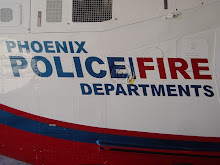
Although training on this kind of situation is not standard for public safety officers, some people following these developments referenced the well-known 1992 firefighter training manual titled "A Fire Officer's Guide to Disaster Control" published by Fire Engineering Books & Videos.
In the training manual, authors and experienced firefighting experts William M. Kramer and Charles W. Bahme covered not only the usual important elements of this public safety profession, their manual also included a chapter titled "Disaster Control and UFOs."
Erath County residents and people who followed the previous sightings with interest might now be reviewing some of the cases earlier this year associated with these unusual incidents. The chapter on UFOs in the Fire Officer's Guide manual might come in handy to reassure the citizens of the area as well as public safety officials.
What had seemed like the end of an unusual chapter in north-central Texas looks like it might be an ongoing story.
Transcendent views affect media, society
By Steve Hammons
Knowingly or unknowingly, people may be looking for transcendent concepts in fields like media, government, education, national defense and international relations. Transcendent concepts can be applied to almost any endeavor and may represent a new wave of thinking about a wide range of human activities.
This perspective includes several assumptions and conclusions.
One factor in this viewpoint is the awareness that new discoveries have been made, and are being made currently, that impact directly on the human race. These discoveries are, in part, related to the capabilities and strengths of human beings as well as the nature of our environment on Earth and in the Universe.
For example, new views about quantum physics, human psychology and other phenomena often provide support for transcendent thinking. Related to this is the viewpoint that these discoveries may indicate that modified approaches to certain challenges are sometimes appropriate.
"Transcendent warfare" concepts can spark new thinking about international conflict and cooperation as well as peace operations, information operations, public diplomacy and humanitarian efforts.
Transcendent ideas can be applied to creative media such as movies, books and online communications platforms.
Whether the challenge is gathering intelligence on destructive terrorists or understanding how the mass media and TV can most successfully connect with audiences, being open to new and interesting developments can be important.
TRANSCENDENT TV
For example, we might look at the changing relationship of people with the TV media. TV is one window into society and can tell us something about ourselves.
In the aftermath of the Hollywood writers strike, studies have shown that TV viewers are drifting away from some of the broadcast networks' programming. A widening variety of good-quality cable channels, delayed viewing via DVRs and current events such as the political campaigns and the financial crisis have been cited as part of the reasons for viewer behavior and choices.
Some observers suggest that viewers want diversion to help them forget their plunging home values, disintegrating financial investments, increasing risks of job loss, apparent government dysfunction and ongoing war in foreign lands.
Other people note that shows having practical value, insight or maybe some valid connection to reality are attractive to many viewers. The idea of shows having meaningful connections to reality should not to be confused with "reality TV" such as competitions at unusual challenges and the camera-eye view of the lives of publicity-seeking lower-tier celebrities.
Another kind of reality TV refers to programs that explore our connections with, and our understanding of other people, society and the fast-changing world we live in today. What is going on in the world? How do I and my family and community fit in? What are the dangers, opportunities and discoveries around us now?
These questions may help create a foundation for TV programming that includes tried-and-true stories and characters, a solid rootedness in interesting current events and plenty of room for imagination and creativity.
Combining these elements with fundamental aspects of human striving, human strength, human dignity and human progress might just be a winning recipe for attracting today's TV viewers. This is the opposite of the "dumbing down" of TV.
Today's mass media, including TV, are platforms within which many creative ideas can flourish, entertain, enlighten and inform.
When we open ourselves to emerging developments and when we craft new approaches and creative endeavors in response to these developments, renewed and significant connections with audiences might result.
CONNECTING AND UNDERSTANDING
The connections between what is going in our lives, our communities, our societies and on our planet are interwoven in many ways. The activities of humanity, the events triggered by Nature and possible impacts from forces and factors we don't fully understand also intertwine.
Exploring the known realities around us as well as examining the unknowns are part of a vibrant and robust approach to many different kinds of endeavors. Some of these knowns and unknowns are equally mysterious, fascinating, frightening or uplifting. They may provide worrisome warnings or hopeful optimism. They can trigger defensive preparation or a peek at a fantastic breakthrough for the human race.
Down-to-Earth challenges can include activities such as developing needed renewable energy, reducing nuclear proliferation and developing innovative educational platforms for our children.
Some of the unusual mysteries that fascinate millions of people are also subject to a transcendent approach.
What are those unidentified flying objects (UFOs) that seem to be spotted fairly frequently over places like Stephenville, Texas? Are all crop circles made by human pranksters? Do humans possess a "sixth sense" of internal awareness that includes extra-sensory perception (ESP)? Are there other dimensions of reality where we go after physical death? What might be hidden within our DNA?
One common denominator in the ideas ranging from transcendent TV to transcendent warfare to unusual transcendent phenomena may be the issue of intelligence gathering and intelligence dissemination. What do people perceive as being valuable, useful, truthful, worthwhile and important? Then, how can the related concepts and information be organized and communicated in effective ways?
A transcendent approach combines the best of solid proven methods along with innovative and leading-edge knowledge and insight. A thoughtful and well-structured combination of these may create another level of understanding and success.
Transcendent viewpoints may also create opportunity for new ways of accomplishing worthwhile objectives that are beneficial at many levels.
Monday, October 6, 2008
Transcendent warfare: New Army manual, research report are valuable
By Steve Hammons
Two new documents by and about the U.S. Army are sparking discussion and debate about various elements of the Army’s missions and future directions.
Both documents, a field manual and a research study report, expand perspectives about achieving short-term and long-term success in various kinds of missions.
Taken together, along with other comprehensive considerations, these views might be considered part of an “outside-the-box” and valuable concept sometimes referred to as “transcendent warfare.”
The new Stability Operations Field Manual, to be released today according to an Oct. 5 Washington Post article, emphasizes the role of “stability operations” in countries and regions that include fragile states and failed states.
The article quoted Lt. Gen. William B. Caldwell IV as saying, "This is the document that bridges from conflict to peace." Caldwell is commander of the U.S. Army Combined Arms Center at Fort Leavenworth, Kansas. The manual was created with the past year at the center.
Another new document is a report by the Rand Corporation based on a study they conducted for the Army Environmental Policy Institute (AEPI). The report is titled “Green Warriors: Army Environmental Considerations for Contingency Operations from Planning Through Post-Conflict.”
The report notes that issues such as clean water, sewage and sanitation, proper handling of hazardous waste and similar challenges can affect mission success in establishing stability and support for U.S. missions by local residents, according to an Oct. 3 report in Newsweek.
How do the Stability Operations Field Manual, the Green Warriors research report and other approaches contribute to thinking and perceptions about transcendent warfare and future success for U.S. missions and activities?
HARD POWER, SOFT POWER, TRANSCENDENT POWER
When a U.S. Navy SEAL officer coined the term “transcendent warfare” several years ago, he was referring to the development of perspectives that include various advances in knowledge about psychology, sociology, physics, intelligence-gathering and other important elements.
The officer’s graduate-level research paper was titled, “Unconventional Human Intelligence Support: Transcendent and Asymmetric Warfare Implications of Remote Viewing.”
The 2001 report by then-Commander L.R. “Rick” Bremseth was part of his studies at the Marine Corps War College, Marine Corps University, Marine Corps Combat Development Command, Quantico, Virginia.
During and after extensive research and interviews, Bremseth noted that emerging developments and perspectives could be very helpful in various kinds of U.S. military and intelligence operations.
Do some of his research findings correlate with ideas such as those expressed in communications platforms such as the Stability Operations Field Manual and Rand’s Green Warriors study?
The answer is probably yes. Thorough, effective planning and implementation of those plans that take into account a wide scope of factors involved in U.S. military and intelligence activities can contribute to success.
While some comprehensive thinking may seem “outside the box,” some of it might be perceived as logical and common sense.
The Stability Operations Field Manual proposes that nations and regions that are havens for terrorism, criminal activities and religious extremism may pose a greater threat to the U.S. than the threat of major conventional battlefield wars.
The Green Warriors report noted that developing and sustaining the support from indigenous populations, such as in Iraq and Afghanistan, can be impacted by how well or poorly local circumstances involving clean water, sanitation and similar issues are handled.
The concepts in the field manual and the Rand report are not new.
The importance and value of comprehensive approaches in “winning hearts and minds” has long been recognized. Perhaps the value of these documents is to remind us that U.S. objectives can be achieved with “soft power” as well as the bombs and bullets of “hard power.”
The ideas of transcendent warfare simply add to the tools and options that are associated with both soft power and hard power.
NEW FORM OF WARFARE
Using Iraq and Afghanistan as examples, it is widely recognized that improving jobs and economic opportunity, getting business and agriculture up and running, providing basic services such as roads and electricity, opening schools and medical facilities, supporting the local communications media and similar activities all work hand-in-hand with hard-power military activities.
Making friends for America can be more helpful than making enemies.
Competence in the use of hard power, “killing people and blowing things up” as some like to say, is a given for military activities, whether we are talking about armies, navies or air forces. But, as we know, sometimes the battle is won but the war is lost.
What is sometimes a more challenging mission is to create peace, stability and long-term friends.
This assumes, of course, that the goal is actually to create stability and peace. When it is claimed or believed that military actions are undertaken for purposes of war-profiteering, to access natural resources such as oil or to intrude upon or dominate a specific region, then the moral authority of a military action will be questioned and possibly resisted.
It is possible that in some cases, conflict and war could be more desirable by some than peace and stability, at least by war-profiteers and those who have less-than-honorable motives.
Here again, perhaps transcendent warfare concepts can be of assistance. This is because some aspects of transcendent warfare look at human consciousness and human psychology in ways that can be helpful in a higher, deeper and more inclusive scope of understanding.
This can be helpful in dealing with other societies. And, it can be helpful in the understanding and advancement of our own nation.
In his Marine Corps War College report, Navy SEAL Bremseth noted that, "The real challenge for the United States is not asymmetric warfare, but rather what this writer calls transcendent warfare, the ability to conceptualize and subsequently actualize an entirely new form of warfare that transcends all previously known models."
He also stated that it would be useful to, "Explore a myriad of phenomena having potential military applications with the goal of developing transcendent and asymmetrical warfare approaches."
Using perspectives and methods that take into consideration the implementation of stabilization activities, peace operations, constructive psychological operations (PSYOP), information operations, open-source intelligence (OSINT), unconventional approaches, transcendent warfare concepts and other tactics and strategies might be very helpful now and in the future.
Saturday, October 4, 2008
TV transforming: Will viewers watch ‘transcendent’ drama?
By Steve Hammons
What do TV audiences want to watch this fall and in the coming months?
After the recent writers’ strike, that is a big question on the minds of people in the TV business. There are few new shows this fall in the aftermath of the strike.
For viewers, the message from creative development folks in the TV business may be: “We are experiencing technical difficulties – please stand by while we figure out what you want to watch.”
Is there viewer interest in futuristic and science fiction kinds of programming? What about cop and investigation shows? Sitcoms? Shows primarily about human relationships? Will viewers tune in to drama shows about various kinds of current events, or is that too depressing?
There seems to be interest in shows about leading-edge scientific developments and even unusual phenomena. Some of these topics fascinate large and diverse audiences.
TRANSCENDENT MEDIA
Combining several of these genres in ways that are fun, moving and meaningful for TV viewers might fall into the category of what is being called “transcendent perspectives” and “transcendent activities.”
These transcendent concepts generally consider our current social, psychological, media, scientific and international realities to be elements that can be adjusted in light of new, emerging developments.
Some of these developments are unconventional.
For example, several years ago, a U.S. Navy SEAL officer wrote a graduate-level research paper that dealt with the government’s Project STARGATE program on ESP, “anomalous cognition” and specific intelligence gathering-activities called “remote viewing.”
The SEAL officer used the term “transcendent warfare” to describe a kind of thinking and viewpoint that takes into consideration new, emerging and very interesting discoveries.
He pointed out that certain new kinds of thinking and perceiving are part of leading-edge understanding of human psychology and human consciousness.
Would TV viewers be interested in drama that blends interesting characters, elements of investigative shows, fascinating and fun locations, current events as well as a higher and deeper “transcendent intelligence” angle?
TELEVISION TRANSFORMING
Some trend-spotters or trend-guessers say that viewers want escapist TV to take their minds off of the wars in Iraq and Afghanistan, terrorism, the worsening economic situation, concerns about government integrity and all of the politics in an election year.
They suggest that people want shows that take us back to the “good old days” of years past. Remakes of previous programs from previous decades may be popular with baby boomers and new generations coming up too.
It may be difficult to determine what viewers want to watch when they themselves may not be sure.
Whatever the TV audiences are hungry for, writers and producers have a larger window of opportunity this fall to brainstorm about it.
In part because of the writers’ strike, TV executives and entertainment writers have noted that, perhaps especially for broadcast networks, new shows will be rolled out this winter in a sort of “fall season, part two.” In fact, some say that the fall season has expanded to 365 days a year.
The strike by more than 12,000 writers of the Writers Guild of America, West (WGAW), and Writers Guild of America, East (WGAE), began Nov. 5, 2007. It interrupted the usual cycle of development of existing and new shows.
When the strike ended on Feb. 12, 2008, the timetables for creating new shows had been disrupted. As a result, this year’s fall season for fresh programming included only a fraction of the number of new programming usually rolled-out in the fall.
While the creative development pipeline fills up again with new series concepts, decision-makers are trying to read the minds of viewers: What do TV audiences want to watch?
The wave of transcendent perception may be emerging now more significantly. Media that embrace it and utilize it might ride that wave to new success in connecting with audiences in important ways.