By Steve Hammons
More information gathering and coordination of efforts are needed to respond to reports that U.S. Navy aircraft carrier strike groups have encountered UFOs at sea, according to a national security professional.
The headline of his article on The Hill website Nov. 2 says a lot: “The Navy acknowledges UFOs — so why aren't they on Washington's radar?” In the article, Christopher Mellon warns that a serious threat has possibly emerged and he urges government leaders, including those in Congress, to begin a robust response promptly.
Mellon has held positions in the Department of Defense related to intelligence, security and information activities, and was minority staff director of the Senate Select Committee on Intelligence.
He explains in his article that the recently-released video from Navy fighter jets is part of a much bigger story. Mellon writes, “In what could be a precursor to further stunning developments, the U.S. Navy has publicly acknowledged that the advanced aircraft depicted in several recently declassified gun-camera videos are UFOs, or what the Navy prefers to call ‘Unidentified Aerial Phenomenon’ (UAPs).”
Mellon plainly states that “bizarre vehicles” have “brazenly operated in restricted U.S. military airspace.” He says we have a situation “with ample warning lights flashing.”
‘UAP’ SITUATIONAL AWARENESS
Government officials and other leaders need to start taking this situation seriously, Mellon says. He asks, “Is the information too jarring and radical to process? Are U.S. government officials in denial?”
What’s worrying Mellon? He describes the highly unusual characteristics that these unknown objects or phenomena have reportedly demonstrated. “The vehicles observed and recorded by U.S. Navy fighter pilots seem impervious to altitude or the elements; they are able to maneuver above 80,000 feet,” he explained.
“They can hover and then instantly accelerate to supersonic and even hypersonic speeds; they have very low radar cross-sections and use a means of propulsion and control that does not appear to involve combustion, exhaust, rotors, wings or flaps.”
Mellon lays out the obvious problematic conclusion: “Since the Navy asserts these are not U.S. aircraft, we are confronted by the daunting prospect that a potential adversary of the United States has achieved the ability to render our most sophisticated aircraft and air defense systems obsolete.”
Although some members of Congress have received briefings on these incidents, the appropriate committees should begin addressing the situation now, Mellon tells us. He notes, “Some congressional oversight committees have asked for and received briefings, but none has held a hearing, either open or closed; none has appropriated funds for collection or analysis; none has even asked for a report or a threat assessment.”
And while politicians and officials in Washington remain under-informed about the seriousness of the situation, others are recognizing the potential danger. Mellon says, “I’ve interviewed numerous active-duty and retired military personnel who have encountered these mysterious vehicles. Without exception they express grave concern for their colleagues and near disbelief that our government is not reacting more vigorously.”
To put the current situation in context, Mellon compares it to other historical national security tragedies. “Indeed, examination of major US intelligence failures — from Pearl Harbor to the 9/11 terrorist attacks and Iraqi WMD — shows that, in each case, we had information that, properly analyzed and acted upon, could have prevented disaster. We’re at a similar place today, with ample warning lights flashing but no effective effort to pool relevant data from the myriad services and agencies that possess it.”
IMPROVED UNDERSTANDING NEEDED
Mellon advocates coordination of current information resources throughout the U.S. government to acquire more understanding of the phenomena – and if a threat to the U.S. exists.
He wrote, “Why are we not analyzing the vast quantities of data already collected by America’s vast sensor networks, already bought and paid for, to see what light that data might shed on the issue? Government paralysis is something we’ve grown accustomed to on domestic matters but, when it affects national security as well, we truly are a nation at risk.”
We should be gathering more information, conducting research and investigation, and putting together pieces of the puzzle regarding mysterious, highly-unusual objects and phenomena, Mellon states.
More specifically, he warns that, “The National Reconnaissance Office, Defense Intelligence Agency, CIA, Air Force and Navy, FBI and National Security Agency — there is no place in the U.S. government where all UAP information comes together. In that regard, the present situation is akin to counterterrorism before the establishment of the National Counterterrorism Center.”
No need to delay for funding issues, Mellon claims. “Thankfully, new military spending is not required; we simply need to implement an effective strategy for collection and analysis using existing resources,” he writes.
With regard to improved coordination, analysis and use of existing resources, does this include integrating research already conducted over past decades? Common sense tells us that serious investigation of the UFO phenomena by elements of the U.S. government probably began in the 1940s, particularly after World War II.
Because of national security and public safety concerns, a significant amount of information has probably already been acquired over the years. Would sharing this data more widely with the defense community, Congress and the American people be helpful or problematic? Or both?
(Related articles “Storytelling affects human biology, beliefs, behavior” and “Reagan’s 1987 UN speech on ‘alien threat’ resonates now” are posted on the CultureReady blog, Defense Language and National Security Education Office, Office of the Undersecretary of Defense for Personnel and Readiness, U.S. Department of Defense.)
Friday, November 8, 2019
Robust response needed on US Navy UFO incidents?

Wednesday, October 16, 2019
Motives matter on research into UFOs, says former State Dept. analyst
By Steve Hammons
Amid recent news reports and TV shows about UFOs whizzing around U.S. Navy jets and aircraft carrier battle groups off the U.S. west and east coasts, a former national security analyst warns us to be cautious and thoughtful.
Acquiring highly-advanced UFO knowledge and technology could be very helpful for humanity – or dangerous, he wrote.
In an article published on The Hill website Oct. 13, opinion contributor Marik von Rennenkampff explored the U.S. government’s interests in “unidentified aerial phenomena (UAP).” Under the headline “3 reasons to investigate the US Navy UFO incidents,” von Rennenkampff suggests we look within.
If humans were to acquire such knowledge, “Given the anti-democratic and authoritarian inclinations of some major world powers, it is imperative that such capabilities fall into the ‘right’ (i.e., democratic) hands,” von Rennenkampff wrote.
Certain advanced knowledge and technology should also affect our perspectives, he says. “In the event that such capability exists, mere knowledge thereof should prompt a fundamental shift away from humanity’s baser priorities in favor of loftier, nobler objectives.”
URGENT DEVELOPMENTS
The article notes that von Rennenkampff was formerly an analyst with the U.S. Department of State’s Bureau of International Security and Nonproliferation, and with the U.S. Department of Defense.
The Navy cases von Rennenkampff references have been in the news and on TV over the past couple of years. One was a 2004 series of incidents off the San Diego and Mexican coast involving an aircraft carrier battle group. The other also involved a carrier battle group off the U.S. east coast in 2014 and 2015.
Multiple unusual objects were observed by Navy pilots, sometimes in close proximity, recorded by multiple sensors on Navy jets and tracked by shipboard radar. The UAP appeared to pose potential dangers to Navy pilots from collision and demonstrated very unusual aerospace performance, according to Navy witnesses.
What are these UAP? What does it mean? This seems unclear to many people.
There are plenty of experts as well as Hollywood movies warning us about the dangers of potential adversaries from “somewhere else.” Yet, von Rennenkampff also suggests we take a look at human nature too – not always a pretty picture.
Can government officials and other leaders in the U.S. and around the world handle the potential power of advanced knowledge and technology? Can average Americans and people internationally adjust in healthy ways to significant and surprising discoveries?
How much do we need to be concerned about the situation at hand regarding UAP? And how does that phenomena relate to our already-problematic international relations, including urgent military and humanitarian developments in multiple places on Earth.
HIGH-PRIORITY INVESTIGATION WARRANTED
To help readers get up to speed on these Navy reports, von Rennenkampff addresses some of the immediate and obvious issues involved. He writes, “This raises the possibility that these pilots witnessed technology well beyond the grasp or bounds of science.”
And von Rennenkampff noted, “If these accounts are accurate – and sophisticated sensor data indicate that they may be – the capabilities exhibited by these objects represent an astonishing leap forward from the technological status quo. As such, a compelling case can be made to invest in fully investigating these phenomena.”
“First, the national security implications of getting to the bottom of these incidents are beyond obvious,” he wrote.
“In addition to posing a serious collision risk, determining the nature of the objects – whether benign, easily-explainable phenomena or potentially threatening – is of critical importance. Indeed, by some accounts, such incidents are occurring with increased frequency.”
In some of his closing comments, von Rennenkampff again looks at human motivations and human behavior. “Perhaps most importantly, as one of the Navy fighter pilots who reported a close encounter notes, mankind is driven by curiosity. Throughout history the human inclination to explore the unknown has precipitated monumental advances in a short span of time.”
Yes, humankind has been driven by curiosity – as well as by a number of less-admirable motives such as greed, power and conquest, to name a few.
But von Rennenkampff seems to feel we are up to the challenge, or at least to giving it our best efforts. On this UAP or UFO phenomena, he advises that, “a well-funded and efficiently managed public investigation is not only warranted, it should be prioritized.”
(Related articles “Storytelling affects human biology, beliefs, behavior” and “Reagan’s 1987 UN speech on ‘alien threat’ resonates now” are posted on the CultureReady blog, Defense Language and National Security Education Office, Office of the Undersecretary of Defense for Personnel and Readiness, U.S. Department of Defense.)
Thursday, August 8, 2019
Could ‘Hillbilly Elegy’ author J.D. Vance have Appalachian Cherokee ancestry?
By Steve Hammons
Is it possible that J.D. Vance, author of the controversial, best-selling book "Hillbilly Elegy," could have Cherokee background from his Kentucky ancestors?
The short answer is “yes.” Many people who have family roots in the southern Appalachian region do have some Cherokee DNA in the family tree.
Why? Because in the colonial era before the American Revolution and as the new nation expanded west in the 1700s, there was a very significant degree of intermarriage between Anglo, Scottish and Scots-Irish newcomers and the Cherokee in the southern Appalachian mountain area.
During the colonial period, Cherokee territory included parts of what are now Kentucky, West Virginia, Virginia, Tennessee, North Carolina, South Carolina, Alabama and Georgia.
Early colonial explorers, hunters and trappers, traders and other settlers found that the Cherokee could be friendly.
Because the early Cherokee culture was female-oriented and matrilineal, Cherokee women had much freedom to establish romantic relationships and marriages with Anglo, Scottish and Scots-Irish men if they chose.
The Ron Howard Netflix movie based on the "Hillbilly Elegy" book is now being filmed in Vance's hometown of Middletown, Ohio. The book and movie tell a story of his upbringing in Middletown and the region of southwest Ohio where many Kentuckians have migrated.
LOOK IN THE MIRROR
Today, there reportedly may be millions of Americans who primarily self-identify as white, yet also have a Cherokee connection in their lineage. Some families may know about it, some may suspect it and some people might have no idea of this possibility.
Is J.D. Vance one of them?
This connection could be many generations back in the family tree, and with few or no records, clues or even family stories about it. When investigating the possibility of such a link for Americans with a Cherokee connection, what might be some clues?
As discussed, one indicator could be family history in the southern Appalachian mountain region and areas including and surrounding the states of Kentucky, Tennessee, Virginia, West Virginia, North Carolina, South Carolina, Alabama and Georgia.
Physical traits could include a somewhat dark skin complexion, dark hair and eyes, the somewhat stereotypical cheekbones and facial features, light beards and body hair in males, lack of baldness in males and somewhat thick, coarse hair.
Recent controversies in the media have featured the “shaming” of Americans who might or do have Cherokee or other American Indian lineage but are not official members of government-approved Native American groups.
This could discourage some people who might suspect a Cherokee link in the family tree from doing research into it.
But facts are facts.
According to historians and scholars, in the 1700s and 1800s many mixed-ethnicity children were born in the southern Appalachian region and a unique blend of these cultures flourished.
These mixed-ethnicity children sometimes adopted the patrilineal Anglo, Scottish and Scots-Irish names of their fathers and paternal grandfathers. Or, in many cases, there was some blend of Anglo names and Cherokee names, and sometimes in a mix of both English and Cherokee languages.
As the generations rolled on in the 1700s and 1800s, kids grew up, got married and had their own children. And as the larger U.S. society changed, and many Cherokee were forced west by various pressures and the infamous Trail of Tears (1838-39), these mixed-ethnicity Americans blended into the larger population.
It was probably a good idea to “pass as white” in that region when the Cherokee were rounded up by soldiers, their homes and farms stolen, forced into detention camps and then forced to endure extreme hardships and mass death as they were marched and shipped to Oklahoma – Indian Territory.
By the time of the Trail of Tears and after, there were many mixed-ethnicity people who were predominantly white and who had adopted Anglo, Scottish and Scots-Irish names.
And it wasn’t necessarily a good idea to talk about Cherokee grandparents or great-grandparents back then, because there were laws on the books that discriminated against American Indians in significant ways. Anti-Indian laws, bias, attitudes and actions were common and significant.
CHEROKEE HILLBILLIES
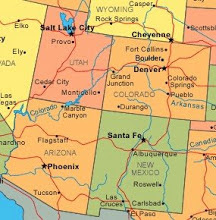
The epicenter of Cherokee culture today in the old eastern homeland is the area around the Tennessee and North Carolina border. The U.S. government-recognized Eastern Band of Cherokee Indians is based there in Cherokee, NC.
The Great Smoky Mountains National Park and the Nantahala National Forest surround the Eastern Cherokee lands. The Blue Ridge National Heritage Area (a partner of the National Park Service) in the Blue Ridge Mountains is also nearby. It includes Cherokee heritage events of various kinds including festivals, music, arts and crafts, and museums.
Throughout the entire southern Appalachian region and surrounding states, there reportedly could be tens of thousands or hundreds of thousands of Americans with Cherokee DNA somewhere in the family tree.
Over the generations, many Kentucky and Appalachian families have migrated along the so-called “hillbilly highway” to the Cincinnati region and the towns north of it, such as Middletown where Vance was raised.
It is a logical conclusion that some of these Appalachian families might or do have Cherokee in the family tree – maybe even J.D. Vance’s family.
And with the tremendous mobility that American society has experienced in recent decades and centuries, people with Cherokee background have spread far and wide – beyond the ancient mountain homeland, beyond Oklahoma Indian Territory, even beyond the borders of the U.S.
The story of the Cherokee is a unique one. It is different from the stories of other American Indian tribes, with the blending of the Cherokee with Anglo, Scottish and Scots-Irish believed to be far more widespread than that of any other tribe. Yet, the experience of the Cherokee is also very similar to that of other North American native groups in many respects.
As we strive for “a more perfect union” in our society now, it might be worthwhile to learn more about the experience of the Cherokee and their ancient southern Appalachian homeland.
And for those American families who just might have Cherokee within them and don’t know about it or are not sure, there are many ways to begin research and investigation to find out more.
You might be surprised about what you learn.
(If you liked this article, please see my other recent ones about the Cherokee on the Joint Recon Study Group and Transcendent TV & Media blogs.)
(Related article “Storytelling affects human biology, beliefs, behavior” is posted on the CultureReady blog, Defense Language and National Security Education Office, Office of the Undersecretary of Defense for Personnel and Readiness, U.S. Department of Defense.)
Friday, February 8, 2019
Story of the Cherokee still emerging today
By Steve Hammons
In an opinion article published on the Cincinnati Enquirer daily newspaper website Oct. 19, 2018, local retired anthropology professor Sharlotte Neely Donnelly, PhD, shared her insights about the Cherokee.
Donnelly taught at Northern Kentucky University (in the Covington, Kentucky, area of metro Cincinnati), was director of the Native American Studies program there and is the author of “Snowbird Cherokees: People of Persistence” and “Native Nations: The Survival of Fourth World Peoples.”
And in an Oct. 1, 2015, article on the website Slate, history professor Gregory D. Smithers, PhD, also shared information and perspectives about the Cherokee.
Smithers is professor of history at Virginia Commonwealth University and author of the book "The Cherokee Diaspora: An Indigenous History of Migration, Resettlement, and Identity."
Both of these experts on Cherokee culture and history have some interesting things to say about some of the controversies we see today.
They examine the Cherokee who ended up in "Indian Territory" (Oklahoma) as well as in the ancient homeland region of what is now Kentucky, West Virginia, Tennessee, Virginia, North Carolina, South Carolina, Georgia and Alabama.
RANDOM ACT OF IDENTITY
In Donnelly’s piece, she explores the evolving legal definitions about who is classified as an American Indian or Native American, or Cherokee, by whom, when, where and why.
She wrote, “Who is defined as an American Indian and how much Indian blood quantum (blood degree/ancestry) is required vary over time, from nation to nation (the USA and Canada), from government bureau to bureau (Bureau of Indian Affairs and Bureau of the Census), from state to state, and from tribe to tribe.”
“In the past, the Cherokees, for example, defined anyone who had a Cherokee mother (and thus membership in one of the seven Cherokee clans) as Cherokee [a matrilineal society], despite blood quantum. Beginning in the 1820s, however, anyone with a Cherokee father was also declared a Cherokee, even though such people were clanless,” Donnelly stated.
She also explained some of the bureaucratic inconsistencies. “Some states have no definition of Indianness, while many have less precise definitions than the federal government. Some states, such as South Carolina, with state Indian reservations, are more precise.”
“The state of North Carolina has a government agency to deal with those they recognize as Indian. The federal government recognizes only one North Carolina tribe, the Cherokees, as being Indians while the state recognizes many others, including the Lumbee, Waccamaw Siouans and Haliwas,” according to Donnelly.
She looked at the evolution of these criteria. “In the early 20th century, the Eastern Band of Cherokee Indians in North Carolina set the minimum blood degree at 1/32 (the equivalent of having one full-blood, great-great-great grandparent) but eventually raised it to 1/16 (the equivalent of having one full-blood, great-great grandparent). When this happened, some Cherokees found they were no longer legally Cherokees.”
“The Keetowah Cherokees in Oklahoma set their minimum even higher, at one-fourth (the equivalent of having one full-blood grandparent), while the Cherokee Nation in Oklahoma has done away with blood degree altogether and requires only that one establish lineal Cherokee ancestry to those listed on the Dawes Roll of 1899-1906.”
A person could be an official Cherokee tribal member, but not a Cherokee in the eyes of the U.S. government for certain benefits, Donnelly said. “The United States Bureau of Indian Affairs (BIA) recognizes the various blood degrees required for tribal membership but requires a minimum of one-fourth for things like higher education grants.”
“So, for example, someone enrolled in North Carolina’s Eastern Band of Cherokee Indians who had a blood quantum of 1/16 to just less than one-fourth would be viewed by the Bureau of Indian Affairs as legally Cherokee but not legally Indian.”
“Canada used to define Indianness as having a father who was recognized as an Indian (mothers did not count) [the reverse of the Cherokee], but in the 1980s Canada switched to a system of blood quantum,” she wrote.
Regarding DNA tests, Donnelly says, “For most Americans with Native American ancestors, that ancestry is five or more generations back. In fact it can be so far back in a family tree that it does not show up in DNA tests. Also, most ancestry testing companies use only a small sample of Native American groups (often less than half a dozen tribes) as a reference for testing, and all of those sample groups tend to be from South, rather than North, America.”
YESTERDAY AND TODAY
In Smithers’ article, he also explores the history and evolution of who is identified as an official Cherokee or other tribal member. He wrote, "At the same time that the Cherokee diaspora was expanding across the country, the federal government began adopting a system of ‘blood quantum’ to determine Native American identity."
"Native Americans were required to prove their Cherokee, or Navajo, or Sioux 'blood' in order to be recognized.”
Smithers explained that, “the federal government’s ‘blood quantum’ standards varied over time, helping to explain why recorded Cherokee 'blood quantum' ranged from 'full-blood' to one 2048th.”
“The system’s larger aim was to determine who was eligible for land allotments following the government’s decision to terminate Native American self-government at the end of the 19th century,” he wrote.
“By 1934, the year that Franklin Roosevelt’s administration adopted the Indian Reorganization Act, 'blood quantum' became the official measure by which the federal government determined Native American identity.” Smithers said.
The decision-makers on these issues evolved, according to Smithers. “In the ensuing decades, Cherokees, like other Native American groups, sought to define ‘blood’ on their own terms.”
“By the mid–20th century, Cherokee and other American Indian activists began joining together to articulate their definitions of American Indian identity and to confront those tens of thousands of Americans who laid claim to being descendants of Native Americans.”
Smithers also explores present-day official Cherokees. “Today, the Cherokee Nation, the United Keetoowah Band of Cherokee Indians, and the Eastern Band of Cherokees comprise a combined population of 344,700.”
“Cherokee tribal governments provide community members with health services, education, and housing assistance.”
“Most Cherokees live in close-knit communities in eastern Oklahoma or the Great Smoky Mountains in North Carolina, but a considerable number live throughout North America and in cities such as New York, Chicago, San Francisco, and Toronto. Cherokee people are doctors and lawyers, schoolteachers and academics, tradespeople and minimum-wage workers,” he wrote.
Smithers also noted, “The cultural richness, political visibility, and socioeconomic diversity of the Cherokee people have played a considerable role in keeping the tribe’s identity in the historical consciousness of generation after generation of Americans, whether or not they have Cherokee blood.”
(If you liked this article, please see my other recent ones about the Cherokee on the Joint Recon Study Group and Transcendent TV & Media blogs.)
(Related article
“Storytelling affects human biology, beliefs,
behavior” is posted on the CultureReady blog, Defense Language
and National Security Education Office, Office of the Undersecretary of
Defense for Personnel and Readiness, U.S. Department of Defense.)
Saturday, October 20, 2018
Americans with Cherokee roots can't rely on government bureaucracies to define them
By Steve Hammons
There’s a rumor out there that life, liberty and the pursuit of happiness are rights that are given to us by a higher Creator, not by governments, government officials and bureaucracies, kings or dictators.
If this is so, we might be unwise to surrender our personal, family and cultural history to judgments from government officials, politicians and bureaucracies. As a result, this path of independent thinking might make us hesitant to rely on national, state and tribal government officials to tell us who we are and who we are not.
These kinds of concerns have emerged in recent days regarding the three Cherokee groups recognized by the U.S. government.
Politicians from national and tribal government have attacked Americans who might or definitely do have Cherokee or other Native relatives and ancestors somewhere in the family tree. And Native Americans with a chip on their shoulder (understandably) have voiced righteous indignation about the "hijacking" of their identity and culture.
Journalists, pundits, political operatives, propagandists and well-meaning observers have weighed in too, often with little knowledge of Cherokee and U.S. history. Many or most of these people also likely have little or no direct experience themselves with Cherokee culture, either in the Oklahoma region or in the southern Appalachian Mountain Range, the ancient ancestral homeland.
Many people are not aware of the robust amount of intermixing between Cherokee and Anglo, Scottish and Scots-Irish newcomers in the Appalachian region in the 1700s.
So which is it? Does a Great Spirit of some kind give us these truths? Or, do national and tribal politicians, pundits and propagandists tell us who we are?
Do these truths flow from the grassroots up through the lives of generations of our ancestors into who we are? Or are these realities interpreted and defined from the top down, from government officials and others?
GROUP THERAPY
In human history and in our contemporary world there are many circumstances where governments, kings and dictators tell people a number of things about themselves.
They may tell people that they have no right to free speech or a free press, no right to self-government and democracy, no right to honest and ethical government officials, no right to education, no right to cultural identity, no right to human dignity, that their status in society is to be subservient or even that of a slave, or that they are sub-human.
Native Americans, of course, have been on the receiving end of this over the centuries. They are not the only ones.
Today, tribal sovereignty and self-government are important. The long, bloody and dark history of U.S. government and civilian actions against Native people proves that.
But government bureaucracies of all kinds can have hidden dangers that require constant vigilance, as do government officials and politicians. Surrendering our own judgment, insights and power to governments and government officials can be unhelpful and counterproductive.
Additionally, in organizations and social groups, people are often defined as either in the group or outside of the group."I’m in the good group and you’re not.” “I’m included, you’re not.” Or, “You’re in the bad group and I’m in the good group.” “You are not like me – you are the ‘other.’”
This seems to be the way of human nature and the human condition.
And this kind of human psychology and behavior probably plays a part in discussions about Cherokee and Native American lineage. Once we recognize this perceptual and behavioral pattern, it might help us see the larger situation more accurately and comprehensively.
STORYTELLING, AWARENESS, PERCEPTION
Over the last week, it has been interesting to see so many politicians and political operatives voice such deep concerns about Cherokee and Native American people. Who knew that certain national politicians, political pundits and media propagandists held such heartfelt concerns about the well-being of Cherokee people?
These politicians and operatives must be the good people I’ve heard about who are fighting for human decency in American and international society, and for justice, truth, freedom of speech and press, a decent way of life for all people, a better world and human progress of all kinds.
Or, could it be that these political operatives are using a number of well-meaning Cherokees, other Native Americans, journalists, observers and those suffering from "white guilt" for larger and darker purposes?
Beware of the “useful idiot” trap. This refers to the manipulation of unsuspecting people to serve clandestine, covert, deceptive and often dark objectives. Sometimes it’s not very covert, but rather obvious, and it does take somewhat of an idiot to not realize it.
In these times of “information warfare” and manipulation here at home and around the world, it’s probably helpful for all of us to develop better skills in awareness and perception. Some people call it “situational awareness” or "situation awareness" – what are all the moving parts going on around us, what’s going to happen next, how should we react or handle it?
This Cherokee issue is just one of many that we need to make good judgments about based on good situational awareness.
It might also be helpful for us to be aware of “weaponized storytelling” or “weaponized narrative.” This method of persuasion is subtle and even unconscious for the reader, viewer and information consumer.
Sometimes we have to be able to see through the BS.
The story of the Cherokee is much deeper and wider in scope than is generally known. And that scope certainly includes the story of the mixing and blending of Cherokee with the early Anglo, Scottish and Scots-Irish explorers, hunters, settlers and generations of their descendants in the Appalachian region and elsewhere from the 1700s to today.
To deny this reality denies a crucial part of the Cherokee story, and of the American story.
(If you liked this article, please see my other recent ones about the Cherokee on the Joint Recon Study Group and Transcendent TV & Media blogs.)
Tuesday, October 16, 2018
Does tribal government politician speak for all Americans with Cherokee ancestry?
By Steve Hammons
In response to a national discussion about the history of the Cherokees and the intermixing of Cherokee with European-Americans (notably Anglo, Scottish and Scots-Irish in the 1700s), the secretary of state of one of the three federally-recognized Cherokee groups issued a public formal statement.
In his statement, Chuck Hoskin, Jr. made some accurate and helpful points. However, a closer look at his comments might provide insight.
Here is Hoskin’s complete statement, with my paragraph breaks for analysis:
"A DNA test is useless to determine tribal citizenship. Current DNA tests do not even distinguish whether a person's ancestors were indigenous to North or South America.”
“Sovereign tribal nations set their own legal requirements for citizenship, and while DNA tests can be used to determine lineage, such as paternity to an individual, it is not evidence for tribal affiliation.”
“Using a DNA test to lay claim to any connection to the Cherokee Nation or any tribal nation, even vaguely, is inappropriate and wrong. It makes a mockery out of DNA tests and its legitimate uses while also dishonoring legitimate tribal governments and their citizens, whose ancestors are well documented and whose heritage is proven.”
“Senator Warren is undermining tribal interests with her continued claims of tribal heritage."
BREAKING IT DOWN
Let’s take a look at Hoskin’s points one at a time:
- "A DNA test is useless to determine tribal citizenship. Current DNA tests do not even distinguish whether a person's ancestors were indigenous to North or South America.”
Some tribes determine membership by “blood quantum,” percentage of Native heritage and some, like the Cherokee, use historical census rolls. Hoskin is correct that DNA tests are not used to determine legal membership in federally-recognized Native tribes and groups.
However, Sen. Elizabeth Warren, to whom Hoskin was directing his comments, never indicated she felt she was eligible for official tribal membership. She states this was just something passed down in her family that she and other family members found worthwhile.
[Update: According to news reports, Warren identified herself as "American Indian" on a Texas Bar Association document.]
- “Sovereign tribal nations set their own legal requirements for citizenship, and while DNA tests can be used to determine lineage, such as paternity to an individual, it is not evidence for tribal affiliation.”
That is also true. Native tribes and groups set their own rules for who is in and who is out for official membership. Tribal governments as well as the U.S. government and various lawsuits also have been part of determining criteria for membership in various tribes. As noted, these criteria vary among tribes, and have changed and morphed over the years.
- “Using a DNA test to lay claim to any connection to the Cherokee Nation or any tribal nation, even vaguely, is inappropriate and wrong. It makes a mockery out of DNA tests and its legitimate uses while also dishonoring legitimate tribal governments and their citizens, whose ancestors are well documented and whose heritage is proven.”
Many Americans who suspect Cherokee or other Native American background in their family trees may disagree with Hoskin when he says it is “inappropriate and wrong” for any Americans to use a DNA test to research these issues.
Is it also wrong to study our ancestry and geneaology using public records and other research? Is Hoskin saying that if we conduct such research and it happens to confirm or discover "any connection to the Cherokee Nation or any tribal nation, even vaguely" that this is also "inappropriate and wrong," as Hoskins states?
What about research and DNA tests about our other ethnic and ancestral backgrounds from around the world?
It seems unclear why Hoskin states that Americans interested in their heritage who take a DNA test are “making a mockery out of DNA tests,” and “dishonoring legitimate tribal governments and their citizens, whose ancestors are well documented and whose heritage is proven.”
Again, if we do family history research other than DNA tests, is that also "dishonoring legitimate tribal governments and their citizens, whose ancestors are well documented and whose heritage is proven," as Hoskins states?
- “Senator Warren is undermining tribal interests with her continued claims of tribal heritage."
Like tens of thousands of Americans, Warren heard family stories of Cherokee background in the family tree. She valued this possible background, like many people. How this is “undermining tribal interests” also seems unclear.
FULL-BLOOD CLUB
In recent years, sometimes with a valid basis, Americans of various ethnicity have looked into Native American heritage in their family backgrounds.
Full-blood and other Native Americans sometimes say these are white “wannabe Indians” who are “appropriating” or "hijacking" Native cultures.
What exactly gives these “official Indians” the right to tell Americans who may very well have Cherokee and other native DNA within them that they have no right to explore and embrace this genetic background within themselves, their families and their ancestors?
The truth is that many members of the three U.S. government-recognized Cherokee groups have mixed-ethnicity of Cherokee and white, often Scots-Irish.
Does a person whose parents were both full Cherokee have more rights and insights than people whose Cherokee lineage is from a great-great-grandmother or a great-great-great-great-grandfather?
The science of DNA has its mysteries and is not fully understood. It apparently does not does not work like a math problem. Biological and other traits we may have inherited from our ancestors do not necessarily work according to mathematical formulas and fractions.
Culturally and socially speaking, of course people raised on reservations and Native nation lands have grown up immersed in Native culture. That goes without saying. And many have also lived the related collective trauma, difficulties and viewpoints.
They've also experienced the sometimes convoluted and questionable politics of Native tribes and leaders over the years – including the significant infighting and fracturing of the Cherokee culture over the decades and centuries.
Does Hoskin have the right to tell millions of Americans with Cherokee ethnic background that they don’t make the grade to join his organization? Yes.
Does he also have the have the right to tell them that they are not worthy of exploring and embracing their Native heritage?
(If you liked this article, please see my other recent ones about the Cherokee on the Joint Recon Study Group and Transcendent TV & Media blogs.)
Monday, October 15, 2018
Many Americans have Cherokee in the family tree
By Steve Hammons
Many Americans have Cherokee DNA within their genetic makeup.
Some families are aware this, some people have heard rumors or stories from family members and some are totally unaware of it. Did great-great-great-grandma really have a Cherokee parent?
There may be many more Americans with Cherokee DNA in them than of other tribes. This is because Cherokees began intermixing with Anglo, Scottish and Scots-Irish explorers, hunters and trappers in the Appalachian region at an early phase in American history – much of it in the early- and mid-1700s.
This created a wide dissemination of Cherokee DNA into many American family trees.
Socially and culturally, many of these developments in the 1700s occurred before some of the more widespread efforts at domination, removal and near-genocide of Native American people later on, though these elements were well underway even in colonial times.
By the time of the infamous forced removal called the Trail of Tears in 1838-39, there were already several generations of mixed-ethnicity families living in the Cherokee mountain regions of what we now call North Carolina, Tennessee and surrounding areas that now include the current states of Kentucky, West Virginia, Virginia, South Carolina, Georgia and Alabama. Many had Scottish or Anglo names, lighter skin and prosperous farms.
Prior to the Trail of Tears, many Cherokee had headed west to Arkansas and elsewhere. Many were able to avoid detention and removal, and stayed in the Appalachian region where the federally-recognized Eastern Band of Cherokee Indians is still located at the Tennessee and North Carolina border.
Because of the mixed ethnicity and, in many cases, Anglo or Scottish names, some of these people could “pass as white." And many may have chosen to do so in order to stay near their home region, or even as they moved west.
WHO ARE WE?
As we know, over the decades and centuries, people from many nations and cultures have arrived North America. The mixing of different ethnic groups here has been a fact of life for generations. Many of us can count at least a half-dozen or more different nationalities and ethnic groups in our family background.
And the more this blending has continued with each generation, the more likely that Cherokee or other Indian DNA is within many of today's American families.
Many don’t know about a Cherokee or Native American ancestor because that side of the family sometimes may not have detailed written records. Maybe relatives didn’t want to talk about “the Indian in the family” or the connection was forgotten or overlooked.
Today, some tribes use what is called the “blood quantum” to identify who has enough Indian “blood” in them to be official tribal members. Often, one-sixteenth blood quantum will qualify a person for official tribal membership.
So, if grandparents, great-grandparents or great-great-grandparents had some significant measure of Indian blood, based in these blood quantum measurements, a person can or cannot be considered a tribal member
To say that someone who is one-eighth is more Cherokee or Native American than a person who is one-sixteenth makes us wonder about the validity of looking at this in terms of mathematical fractions and percentages.
Most likely, a certain genetic background does not affect a person strictly by percentages. If you are one-quarter, one-eighth, one-sixteenth, one-thirty-second, one-sixty-fourth, does that mean the genetic history within you, which goes back into the ancient past, is not valid?
The idea of racial “blood” is, of course, outdated. We now know that our genes and our DNA helix are within every cell of our bodies. We are just scratching the surface of learning what is contained within them and how they function.
The genetic history of our ancestors is passed down over the centuries. It comes together in a child in certain ways, creating certain physical characteristics, and, we suspect, possibly psychological and personality tendencies.
The DNA within each cell of our bodies might act in ways we do not fully understand.
Does having a great-great-great-grandmother or -grandfather who was Cherokee instead of full-blood parents make you less Cherokee? In some ways, maybe yes. In other ways, this might not be so clear.
In some people, maybe this forgotten or hidden DNA is it is “sleeping.” For others, they may have always felt there was something in them connected to the ancient times in the Americas. They might even have slightly darker skin, a certain facial or body structure or other genetic traits. This background may manifest itself a little or a lot.
DNA MEMORIES?
Modern research into the nature of DNA has led to discoveries about this material within each cell of our bodies. DNA has important implications for who each one of us is, on many levels.
Once we have identified the various elements of our family tree and our genetic background, and possibly discovered or suspect Cherokee or other Native American connections, what should we make of it?
The DNA within all living things is the blueprint for what each organism becomes, subject to the environmental influences that can also have significant effects. It determines our physical characteristics and even our vulnerabilities to certain diseases.
For humans, recent discoveries about DNA are rapidly changing our views about the importance of this material. DNA may affect us much more significantly than we imagined. And, it may hold keys to further discoveries.
Is it possible that the DNA helix holds some form of important memories of our ancestors? Back in the 1960s, some psychological researchers claimed that there may be keys that unlock our deep DNA, revealing experiences of past generations.
It has been demonstrated that experiences necessary for survival of a species, even very tiny and simple organisms, are learned and that this knowledge is passed on to subsequent generations genetically.
For humans, with our relatively complex brain, feelings and memories, what other kinds of experiences might be saved in our DNA over the many thousands of years when our ancestors were born, lived, survived and died? Do these influences manifest themselves within us? And how?
Scientists are gradually uncovering the secrets of our DNA. They have mapped much of the DNA helix of not only humans, but other animals and plants. Many human genes remain a mystery and their purpose is unknown.
The idea that deep and ancient memories of our ancestors lie within our own bodies, within our DNA, seems far-fetched. Yet, in the field of genetics research there seems to be so much that is not known that, for an open-minded person, these kinds of theories about deep DNA memories probably cannot be ruled out.
Maybe it is time to consider the depth of our family trees and all of their complex branches and roots throughout time and the development of the human race. Whether Cherokee or other interesting ethnic backgrounds are deep within us, this certainly seems worth exploring.
In this sense, the official and legal definitions of who is Cherokee or part of some other Native American tribe and who is not become less relevant.
If a child in your family were to ask, “Am I part-Indian?” what would your answer be? Do you know for certain?
To find these answers, we can conduct research through DNA tests, genealogy records, by asking older family members and other kinds of investigation.
We can also listen to the voices of our DNA and our ancient ancestors within us.
(If you liked this article, please see my other recent ones about the Cherokee on the Joint Recon Study Group and Transcendent TV & Media blogs.)