By Steve Hammons
Tucked into the southwestern corner of Ohio, along the borders with Indiana and Kentucky, is a region that is the setting for two new and significant media projects on the subject of UFOs.
History Channel recently released a trailer on their new drama series “Project Blue Book” about the U.S. Air Force program based at Wright-Patterson Air Force Base in Dayton, Ohio, from 1952 to 1970.
And Sony Pictures Entertainment has also recently posted a trailer for the new movie “UFO,” also set in southwestern Ohio, this time in the Cincinnati area just south of Dayton. The movie is partially based on the real-life UFO incident at Chicago O'Hare International Airport on Nov. 6, 2007.
Gillian Anderson of the “X-Files” TV series and movies plays a math professor at the University of Cincinnati. She becomes involved in an investigation of a UFO incident at the Cincinnati/Northern Kentucky International Airport.
Movies and TV shows aside, what about the real Project Blue Book based in southwestern Ohio?
Shortly after the project began in 1952 a major UFO incident occurred that July in Washington D.C. Multiple UFOs were tracked by radar and witnessed by reliable people on the ground.
Military aircraft were scrambled to intercept the unknown objects, but were unable to do so. Newspapers carried the dramatic story: "'Saucer' Outran Jet, Pilot Reveals," said the Washington Post front-page headline for July 28, 1952.
Interestingly, a Project Blue Book team member was in Washington at the time.
MANY STORIES TO TELL
The new History Channel series and the Sony Pictures “UFO” movie are not the first time that Project Blue Book, Wright-Patterson AFB and southwestern Ohio have been the subject of movies and TV shows.
For example, in 1978 and ’79, the TV series “Project U.F.O.” reportedly used real cases from Project Blue Book as a basis for episode plots. Jack Webb (of the original “Dragnet” TV series) created “Project U.F.O.” which told the story of two Air Force investigators from Project Blue Book as they follow up on a variety of UFO reports.
Again in 1996 and '97, Wright-Patterson AFB’s Project Blue Book was a focus of the TV series “Dark Skies.” Series creators Bryce Zabel and Brent Friedman told the story of a young congressional aide visiting Project Blue Book on a routine task for the congressman he worked for. He soon finds himself entangled with a separate top secret government UFO project.
But these are not the only connections between Ohio and the UFO phenomena.
One of the most significant real-life cases occurred in 1973, after Project Blue Book officially ended. It became known as the “Coyne Incident.” On Oct. 18, 1973, four members of the U.S. Army Reserve were in their military chopper flying from Columbus in central Ohio to Cleveland up on Lake Erie.
The crew included pilot and aircraft commander Capt. Lawrence J. Coyne (a 19-year Army Reserve veteran), co-pilot Lt. Arrigo Jezzi, flight medic Sgt. John Healey and crew chief Specialist 5 Robert Yanacek.
While en route, a UFO suddenly came into view and flew dangerously close to the helicopter. Coyne, fearing a collision, quickly put the chopper’s controls in the position for a descent. However, the helicopter’s altimeter indicated that it was rising and gaining altitude during this part of the encounter.
Crew members had close-up eyewitness views of the unusual craft. This well-documented case included a formal report from the crew members for the Army Reserve.
CLOSE OHIO ENCOUNTERS
Even Steven Spieliberg’s classic 1977 blockbuster “Close Encounters of the Third Kind” brought us to Ohio in hot pursuit of UFOs.
In opening scenes, Indiana police officers from the Muncie area near the border with Ohio are Code 3 lights-and-sirens chasing multiple UFOs. Power company tech Roy Neary (Richard Dreyfuss) is close behind in his power company truck as UFOs, police and Neary blow through a toll booth on the Ohio state line.
This scene reportedly may be based on an April 17, 1966, incident in Portage County, Ohio, when Ohio officers from several public safety agencies pursued a UFO into Pennsylvania.
Yet another case involving Ohio public safety officers took place on Dec. 14, 1994. The so-called "Trumbull County incident" involved officers from multiple regional public safety agencies who chased a large object that reportedly emitted bright lights of various colors intermittently.
Police radio transmissions of the incident have provided good documentation of this remarkable case. The Trumbull County incident was subsequently well-portrayed in a TV documentary segment.
Even though several unusual UFO incidents have taken place in Ohio over the years, and Wright-Patterson AFB has been the focus of much research on this topic, it gets even more interesting.
According to rumors, reports and tales from people who have researched the UFO phenomena, after the alleged July 1947 crash of an unusual craft near Roswell, New Mexico, the remains of the craft were promptly transported to Wright-Patterson AFB.
This makes sense because Wright-Patterson was then and is now home to the Air Force’s center for analysis of foreign aircraft – aircraft of adversaries, “frenemies” and even allies. It would be the logical place to have experts thoroughly examine an unusual craft.
As the new History Channel series on Project Blue Book and “UFO” movie with Gillian Anderson roll out, more viewers will become somewhat familiar with the region around southwestern Ohio where these stories take place.
By viewing the UFO phenomena through the lens of southwestern Ohio, we might encounter several mysteries to explore and insights to discover.
Tuesday, August 14, 2018
UFOs in the heartland: New movie, ‘Blue Book’ TV series set in southwestern Ohio

Wednesday, May 2, 2018
Telling the story of UFOs: Journalists face many responsibilities
By Steve Hammons
The recent and ongoing controversy about releases of sensitive information on unidentified aerial phenomena (UAP), also known as unidentified flying objects (UFOs), seems to raise both new and longstanding fundamental points about freedom of the press and the role of journalism in society.
This UAP/UFO topic might serve as a unique example about the way we look at the roles of journalism, government and citizens on an issue that could be both important to know about and also require discretion and sensitivity.
Today’s journalists and many other segments of society face continual changes in the evolving economy, technological development, scientific updates and the many other aspects of everyday life.
Journalism in particular is dealing with longstanding ethical and professional guidelines about freedom of the press and responsible reporting.
These are combined with a changing landscape of Internet technology and certain characteristics of major media companies.
BALANCING ACT
The touchstone of the U.S. Constitution and its provisions outlining freedom of speech and freedom of the press continue to be fundamental reference points. Many of the U.S. Constitution’s other attempts to strengthen human liberty are equally valuable and often equally controversial.
The task of balancing these freedoms with responsible behavior and common-sense discretion is now front and center in discussions about various current events.
And, odd as it may seem, the UAP/UFO subject is one of these current challenges.
Just like other sensitive subjects involving national security, some people who have researched the UAP/UFO situation claim that a high level of restriction by governments on information about this topic is interfering with the right of citizens to know what their governments are doing.
And, the argument extends to the view that human beings at the grassroots of society have a need to know about certain subjects that could affect them, including unusual and unconventional discoveries and developments.
The counterpoint to this view is that some subjects must be kept secret for the sake of the greater good of maintaining national defense. And, in many cases, international alliances and friendships among nations and societies are also at stake.
How should the profession and craft of journalism handle these factors?
When the additional challenges of certain perspectives by media bosses in a time of changing economic dynamics come into play, journalists are now, as they often have been, faced with soul-searching dilemmas.
REPORTING ON MYSTERIES
In the case of unusual and unconventional scientific subjects, additional obstacles for journalism include self-censorship by media management and often by certain elements of scientific communities. These factors may also dovetail with defense-related information restriction for reasons of strategic national and global safety as well as tactical operational security.
Despite statements from people with various viewpoints that decisions about balance between security and freedom of the press are easy, this is probably not always the case.
As we know, sometimes a “top secret” classification is used to cover up wrongdoing and inappropriate conduct.
At the same time, other classified situations, including highly compartmented and need-to-know circumstances, might truly require robust information security for a number of legitimate reasons.
According to some researchers, the UAP/UFO situation falls into a complex category of emerging scientific developments that could significantly change our views of Earth, the Universe, life and the human race. It may be quite complex because the various kinds of unusual flying objects seen over the decades and centuries are probably associated with even more surprising mysteries.
Extraterrestrial visitors, multiple dimensions, space-time anomalies, forgotten histories of human civilization, undiscovered aspects of human DNA, extrasensory perception and other edge-science subjects have all been linked to the UAP/UFO phenomena, both directly and indirectly.
Some researchers indicate this may only be the tip of the iceberg.
Responsible journalism on these kinds of subjects seems to have been somewhat limited to date. But that does not mean today’s journalists are incapable of handling the situation responsibly and professionally.
Understanding various security implications of unconventional situations that could affect the safety of American and global society must be part of journalistic considerations and judgment.
Important foundational elements of the U.S. Constitution and Bill of Rights are also factors that are key parts of responsible journalism in days past, now and in the future.
(Related articles “Storytelling affects human biology, beliefs, behavior” and “Reagan’s 1987 UN speech on ‘alien threat’ resonates now” are posted on the CultureReady blog, Defense Language and National Security Education Office, Office of the Undersecretary of Defense for Personnel and Readiness, U.S. Department of Defense.)
Monday, September 5, 2016
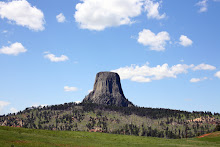
‘Close Encounters’ Wyoming landing zone may hold lessons for us today
By Steve Hammons
In the 1977 movie "Close
Encounters of the Third Kind," with its amazing ending at Devils Tower,
Wyoming, there were references to real situations.
(Related articles “Storytelling affects human biology, beliefs, behavior” and “Reagan’s 1987 UN speech on ‘alien threat’ resonates now” are posted on the CultureReady blog, Defense Language and National Security Education Office, Office of the Undersecretary of Defense for Personnel and Readiness, U.S. Department of Defense.)
Monday, December 28, 2015
Readers review metaphysical-military-intelligence adventure novel ‘Mission Into Light’
The reader reviews below were very gratifying for me as a writer, and I felt it might be a good idea to share them.
–Franklin J. Fields, Jr.
....................
(Related article “Storytelling affects human biology, beliefs, behavior” is posted on the CultureReady blog, Defense Language and National Security Education Office, Office of the Undersecretary of Defense for Personnel and Readiness, U.S. Department of Defense.)
Thursday, July 23, 2015
Reagan’s 1987 UN speech on ‘alien threat’ resonates now
Reagan appeared to hold an optimistic view of humanity. He seemed to indicate that he felt the human race would pull together in greater unity in the face of a larger danger. As a result, a greater awareness about what we have in common as humans would help us overcome the perpetual wars, death and destruction that have been a large part of the experience of the human race on Earth.
(Related article “Storytelling affects human biology, beliefs, behavior” is posted on the CultureReady blog, Defense Language and National Security Education Office, Office of the Undersecretary of Defense for Personnel and Readiness, U.S. Department of Defense.)
Thursday, April 23, 2015
Japanese-American U.S. Army intelligence unit helped win WWII
(This article was posted 4/22/15 on the CultureReady blog, Defense Language and National Security Education Office, Office of the Undersecretary of Defense for Personnel and Readiness, U.S. Department of Defense.)
The Defense Language Institute Foreign Language Center in Monterey, California, traces its roots to the secret World War II U.S. Army intelligence unit comprised of Japanese-Americans – the Military Intelligence Service (MIS).
Then, as now, we needed to succeed militarily and also communicate with other cultures and nations.
The MIS was started in late 1941 as a unit to train Japanese-Americans (Nisei) to conduct translation and interrogation activities. MIS men came mostly from Hawaii and the West Coast.
Although most were raised as American kids, they experienced significant racial prejudice and discriminatory laws. After Pearl Harbor, Japanese American families had been stripped of property and businesses and forced into the infamous relocation camps. MIS men emerged out of this environment.
....................
For more information:
Tuesday, February 24, 2015
Phoenix conference on UFOs reveals new insights
(As a freelance, independent journalist, I was issued media/press credentials by Open Minds Production of Tempe, Arizona, to cover this fascinating conference. My thanks to Open Minds Production and Maureen Elsberry.)
The audience at the 24th annual International UFO Congress Convention & Film Festival near Scottsdale, Arizona, heard some fascinating presentations that were at times both hopeful and frightening.
From ancient accounts in Native American lore to ongoing scientific developments, speakers explored many aspects of research about UFOs.
Sensitive U.S. military bases like Wright-Patterson Air Force base in southwestern Ohio and Area 51 in southern Nevada have played key roles associated with this challenging situation, according to presentations at the conference.
The Rendlesham Forest incident at a U.S. air base in the UK and UFO crashes around the U.S.-Mexican border were also discussed. Cattle mutilations and human abductions, including group abductions, were examined as well.
The five-day conference, film festival and related activities took place Feb. 18 – 22 at the Wa-Ko-Pa resort, east of Fountain Hills and Scottsdale, in the northeast metro Phoenix region.