By Steve Hammons
The recent and ongoing controversy about releases of sensitive information on unidentified aerial phenomena (UAP), also known as unidentified flying objects (UFOs), seems to raise both new and longstanding fundamental points about freedom of the press and the role of journalism in society.
This UAP/UFO topic might serve as a unique example about the way we look at the roles of journalism, government and citizens on an issue that could be both important to know about and also require discretion and sensitivity.
Today’s journalists and many other segments of society face continual changes in the evolving economy, technological development, scientific updates and the many other aspects of everyday life.
Journalism in particular is dealing with longstanding ethical and professional guidelines about freedom of the press and responsible reporting.
These are combined with a changing landscape of Internet technology and certain characteristics of major media companies.
BALANCING ACT
The touchstone of the U.S. Constitution and its provisions outlining freedom of speech and freedom of the press continue to be fundamental reference points. Many of the U.S. Constitution’s other attempts to strengthen human liberty are equally valuable and often equally controversial.
The task of balancing these freedoms with responsible behavior and common-sense discretion is now front and center in discussions about various current events.
And, odd as it may seem, the UAP/UFO subject is one of these current challenges.
Just like other sensitive subjects involving national security, some people who have researched the UAP/UFO situation claim that a high level of restriction by governments on information about this topic is interfering with the right of citizens to know what their governments are doing.
And, the argument extends to the view that human beings at the grassroots of society have a need to know about certain subjects that could affect them, including unusual and unconventional discoveries and developments.
The counterpoint to this view is that some subjects must be kept secret for the sake of the greater good of maintaining national defense. And, in many cases, international alliances and friendships among nations and societies are also at stake.
How should the profession and craft of journalism handle these factors?
When the additional challenges of certain perspectives by media bosses in a time of changing economic dynamics come into play, journalists are now, as they often have been, faced with soul-searching dilemmas.
REPORTING ON MYSTERIES
In the case of unusual and unconventional scientific subjects, additional obstacles for journalism include self-censorship by media management and often by certain elements of scientific communities. These factors may also dovetail with defense-related information restriction for reasons of strategic national and global safety as well as tactical operational security.
Despite statements from people with various viewpoints that decisions about balance between security and freedom of the press are easy, this is probably not always the case.
As we know, sometimes a “top secret” classification is used to cover up wrongdoing and inappropriate conduct.
At the same time, other classified situations, including highly compartmented and need-to-know circumstances, might truly require robust information security for a number of legitimate reasons.
According to some researchers, the UAP/UFO situation falls into a complex category of emerging scientific developments that could significantly change our views of Earth, the Universe, life and the human race. It may be quite complex because the various kinds of unusual flying objects seen over the decades and centuries are probably associated with even more surprising mysteries.
Extraterrestrial visitors, multiple dimensions, space-time anomalies, forgotten histories of human civilization, undiscovered aspects of human DNA, extrasensory perception and other edge-science subjects have all been linked to the UAP/UFO phenomena, both directly and indirectly.
Some researchers indicate this may only be the tip of the iceberg.
Responsible journalism on these kinds of subjects seems to have been somewhat limited to date. But that does not mean today’s journalists are incapable of handling the situation responsibly and professionally.
Understanding various security implications of unconventional situations that could affect the safety of American and global society must be part of journalistic considerations and judgment.
Important foundational elements of the U.S. Constitution and Bill of Rights are also factors that are key parts of responsible journalism in days past, now and in the future.
(Related articles “Storytelling affects human biology, beliefs, behavior” and “Reagan’s 1987 UN speech on ‘alien threat’ resonates now” are posted on the CultureReady blog, Defense Language and National Security Education Office, Office of the Undersecretary of Defense for Personnel and Readiness, U.S. Department of Defense.)
Wednesday, May 2, 2018
Telling the story of UFOs: Journalists face many responsibilities

Monday, September 5, 2016
‘Close Encounters’ Wyoming landing zone may hold lessons for us today
By Steve Hammons
In the 1977 movie "Close
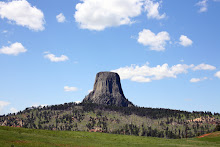
Encounters of the Third Kind," with its amazing ending at Devils Tower,
Wyoming, there were references to real situations.
For example, the police chase across
the Ohio-Indiana state line early in the film resembled actual incidents in
that region.
And interestingly, Wright-Patterson
Air Force Base is also located near the Ohio-Indiana border in southwestern
Ohio. That base is home to an Air Force foreign technology research center and
closely associated with the alleged "Roswell incident" and subsequent
research.
In "Close Encounters" the clandestine logistics and security operation
at Devils Tower was facilitated by U.S. Army Special Forces (Green Berets). In
real life, some of their specialties are covert and unconventional operations.
Army Special Forces also works in roles to establish rapport with indigenous
populations and provide training.
But is there more about Devils Tower
that we can learn?
BEAR LODGE
Native American Indians had a very
different name for the unusual geological formation known as Devils Tower.
To the Lakota and Cheyenne, it was
called “Bear Lodge,” “Grizzly Bear Lodge,” or “Bear Lodge Butte.” The Cheyenne
and Crow also referred to it as “Bear’s House” or “Bear’s Lair.” It was also
called “Bear’s Tipi” by the Cheyenne and Arapaho. To the Kiowa, it was “Tree
Rock.”
How did Native American names
associated with a bear lodge become “Devils Tower?” It is believed that an
interpreter in an 1875 expedition in the area misunderstood the Indian words
and translated them as “Bad God’s Tower” which was later changed to “Devil’s
Tower,” and eventually to “Devils Tower” (no apostrophe).
President Theodore Roosevelt
declared the huge rock formation a U.S. National Monument in 1906. Today, the
entire monument area includes 1,347 acres.
Interesting legends and folklore
about the site may also hold clues about more subtle connections at Devils
Tower or Bear Lodge.
A Lakota tale reportedly describes
six Lakota girls picking flowers there when they were chased by bears. The
Great Spirit helped the girls by raising the ground under them. The distinctive
vertical striations of the rock were made when the bears tried to climb it but
slid down, leaving huge scratch marks, according to this legend.
A Kiowa story is similar. Seven
girls playing were chased by large bears. To escape, the girls climbed a rock
and prayed to the Great Spirit for help. Answering the girls’ prayers, the
Great Spirit caused the rock to rise to the heavens, saving the girls as the
bears tried to climb the rock, leaving their claw marks.
As the girls reached the uppermost
realms of the sky, they became the star constellation the Pleiades. This star
system is sometimes associated with extraterrestrial visitors in more modern
cases.
There is another legend about
several boys escaping a bear, praying to the Creator for help, being raised up
on the rock and escaping back to their village with the help of an eagle.
ALIEN VISITORS
When Army Special Forces,
scientists, technicians, defense and intelligence officials, and the mysterious
12-person team infiltrate the Devils Tower or Bear Lodge region in "Close
Encounters," can we make any connections to this Native American Indian
lore?
Many Indian tribes have oral
histories about unusual visitors or beings of many kinds. In some legends, the
visitors come from far away in the skies. In others, certain beings are native
to Earth, or live nearby, and are part of the mysteries of Nature and
reality.
Even now, there are many reports of
mysterious phenomena in Indian Country. And, Native American perspectives can
be helpful to learn about.
As we know, there is a troubling
history of conflicts with Native American tribes over centuries as Europeans
landed, conquered, took land, enslaved and destroyed or nearly destroyed native
societies and cultures.
When the United States was formed
and European colonists became "Americans," regional militias and
federal army troops often did the same.
For example, in the case of the
Cherokee, their ancient homeland in the Appalachian Mountain region stretched
from Tennessee and North Carolina to Georgia and Alabama. Starting in the
1700s, there was a large degree of intermarriage with Scottish, Scots-Irish and Anglo explorers and settlers, resulting in the millions of Americans today
who have Cherokee DNA within them.
But this did not help the Cherokee
when in 1838 men, women, children and the elderly were forced at gunpoint and
bayonet point from their homes and farms into prison camps, their land stolen,
and marched to Oklahoma on the terrible and deadly “Trail of Tears.” Many
mixed-ethnicity Cherokee were reportedly able to avoid this removal by
self-identifying as white.
Their experience parallels the
history of many other tribes in some ways, yet is quite different in other
ways.
Today, some researchers advise us to
consider the experience of Native Americans who faced a visitation or invasion
of technologically superior “aliens” from England, France, Spain and elsewhere
in Europe.
Could Earth humans dealing with advanced
beings from elsewhere experience a fate similar to that of Native American
tribes?
Maybe we can take another look at
"Close Encounters" in light of
the history of Bear Lodge or Devils Tower. That location may serve as a way
to explore the many lessons about connections between American history,
humanity and Nature.
(Related articles “Storytelling affects human biology, beliefs, behavior” and “Reagan’s 1987 UN speech on ‘alien threat’ resonates now” are posted on the CultureReady blog, Defense Language and National Security Education Office, Office of the Undersecretary of Defense for Personnel and Readiness, U.S. Department of Defense.)
(Related articles “Storytelling affects human biology, beliefs, behavior” and “Reagan’s 1987 UN speech on ‘alien threat’ resonates now” are posted on the CultureReady blog, Defense Language and National Security Education Office, Office of the Undersecretary of Defense for Personnel and Readiness, U.S. Department of Defense.)
Monday, December 28, 2015
Readers review metaphysical-military-intelligence adventure novel ‘Mission Into Light’
By Steve Hammons
The reader reviews below were very gratifying for me as a writer, and I felt it might be a good idea to share them.
In
their comments on the Amazon.com pages for my first novel "Mission Into
Light" and the sequel "Light's Hand," these readers seem to have identified some of the storytelling elements I was trying to use and achieve.
Reader reviews on Amazon ...
Excellent
story from a gifted writer! The book was difficult to put down. I recommend it
highly and am buying a second copy for a gift. It was fast-moving with lots of
action. The short chapters made it easy to read and a lot of fun. The book ties
many relevant and cutting edge topics into an incredibly interesting story. I
particularly liked the scientific and government intelligence issues. Don't
miss this one!
–Franklin J. Fields, Jr.
–Franklin J. Fields, Jr.
Very
interesting story. I enjoyed it, but I have to say that if any part or parts of
the story had a basis in what might have actually happened, that would make it
a fascinating read that
I would not soon forget and certainly desire more of!!!!!!!! The fact that one
of the characters has a similar background to the author's causes me to suspect
that this story does have its roots in fact but can’t be presented in that way
for reasons only known to the author. Is he framing true information within a
false story because it's the only way acceptable to those who govern the
truth?? I will continue to search for clues to confirm my theory of its fact
based core. His second book is soon to be delivered and I'm very much looking
forward to it. –Ralph
As [Franklin D. Fields, Jr.,
Esq.] Esquire said so much better than I could, this was a great read! I
couldn't put it down. And now I've ordered the next one. And I'm going to see
what else Hammons has to offer. I'm glad I got this book. –CB
Very
well written. Always something happening. The story flows well and ties in very
well with the [sequel] … Light's Hand. The ending will bring tears of happiness
to your eyes. –Don
This is
pretty spot on to reality and keeps ones interest. I highly recommend it. –Jeanette
Z. Phillips
....................
The novels are available worldwide in 6"x9" paperback and e-book from most online booksellers. For more information, visit the books' Amazon
site here.
(Related article “Storytelling affects human biology, beliefs, behavior” is posted on the CultureReady blog, Defense Language and National Security Education Office, Office of the Undersecretary of Defense for Personnel and Readiness, U.S. Department of Defense.)
(Related article “Storytelling affects human biology, beliefs, behavior” is posted on the CultureReady blog, Defense Language and National Security Education Office, Office of the Undersecretary of Defense for Personnel and Readiness, U.S. Department of Defense.)
Thursday, July 23, 2015
Reagan’s 1987 UN speech on ‘alien threat’ resonates now
By Steve Hammons
(This article was posted on the
CultureReady blog of the U.S. Defense Language and National Security Education
Office dated 8/5/15.)
On Sept. 21, 1987, then-U.S. President Ronald Reagan gave an address to
the United Nations General Assembly. In an often-quoted section of his speech,
Reagan asked rhetorical questions and commented about the nations and cultures
of the world uniting in common efforts to live in peace and avoid wars and bloodshed.
“Cannot swords be turned to plowshares? Can we and all nations not
live in peace? In our obsession with antagonisms of the moment, we often forget
how much unites all the members of humanity,” Reagan said.
“Perhaps we need some outside, universal threat to make us recognize
this common bond,” Reagan continued.
“I occasionally think how quickly our differences worldwide would
vanish if we were facing an alien threat from outside this world. And yet, I
ask you, is not an alien force already among us? What could be more alien to
the universal aspirations of our peoples than war and the threat of war?”
In these statements, Reagan seems to be noting that in addition to
the diverse cultures and societies around the world, we should also keep in
mind the larger human culture. And despite conflicts and wars throughout human
history to the present day, this larger human culture has many unifying
elements.
UNIFIED HUMANITY
Among these are the major accomplishments of humanity, including
the survival of our human species on this planet over hundreds of thousands of
years. The development of agriculture, language, education, art, music and
technology are common to most human cultures.
Reagan urged us to see the big picture – “how much unites all the
members of humanity.” He warned us to take the long view instead of “our
obsession with antagonisms of the moment.”
Of course, the nations of the world already engage in significant cooperation
on many levels. These include efforts to improve trade and economic prosperity,
share cultural resources and viewpoints, protect global public heath, and respond
to disasters and humanitarian challenges.
Yet, there is room for significant improvement in how nations and
cultures interact, and how individual humans treat one another.
These conflicts, of course, are not just between countries and
cultures. Within the many nations and cultures on Earth, we often see internal
conflict and strife when people within a society are divided and angry about
real or perceived injustice, oppression, ethnic and religious differences or
some other cause.
In his address, Reagan theorized that these many sources of
discord and conflict around the world “would [quickly] vanish if we were facing
an alien threat from outside this world.” And, he put forth the idea that, “Perhaps
we need some outside, universal threat to make us recognize this common bond.”
Was Reagan correct? Would certain adverse developments help bring
the human race together? Would the human race unify in the face of a
devastating impending meteor strike, severe global disease pandemic, worldwide natural
disaster or other threat?
THREAT OR BREAKTHROUGH
Reagan appeared to hold an optimistic view of humanity. He seemed to indicate that he felt the human race would pull together in greater unity in the face of a larger danger. As a result, a greater awareness about what we have in common as humans would help us overcome the perpetual wars, death and destruction that have been a large part of the experience of the human race on Earth.
Implicit in his speech, the former president told us that we have
the potential to transcend these destructive behaviors and seize opportunities
to focus on unifying instincts, developments and events.
Would it really require “an alien threat from outside this world”
for the people of Earth to make significant progress toward peace and
prosperity instead of perpetual conflict?
Or, might we stumble on this truth without an impending disaster?
Can we reach a tipping point when it becomes evident and obvious that our “universal
aspirations” are more important and fundamental than war and destructive
competition?
Instead of “an alien threat,” what if a positive kind of
development emerged? Such a development could include scientific discovery of a
remarkable nature or a change in global human psychology and consciousness.
Instead of Reagan’s concept of an “outside, universal threat,” what
might happen if there was an inside, universal breakthrough that takes the
human race on to the next levels of our development?
(Related article “Storytelling affects human biology, beliefs, behavior” is posted on the CultureReady blog, Defense Language and National Security Education Office, Office of the Undersecretary of Defense for Personnel and Readiness, U.S. Department of Defense.)
(Related article “Storytelling affects human biology, beliefs, behavior” is posted on the CultureReady blog, Defense Language and National Security Education Office, Office of the Undersecretary of Defense for Personnel and Readiness, U.S. Department of Defense.)
Thursday, April 23, 2015
Japanese-American U.S. Army intelligence unit helped win WWII
By
Steve Hammons
(This article was posted 4/22/15 on the CultureReady blog, Defense Language and National Security Education Office, Office of the Undersecretary of Defense for Personnel and Readiness, U.S. Department of Defense.)
The Defense Language Institute Foreign Language Center in Monterey, California, traces its roots to the secret World War II U.S. Army intelligence unit comprised of Japanese-Americans – the Military Intelligence Service (MIS).
Then, as now, we needed to succeed militarily and also communicate with other cultures and nations.
(This article was posted 4/22/15 on the CultureReady blog, Defense Language and National Security Education Office, Office of the Undersecretary of Defense for Personnel and Readiness, U.S. Department of Defense.)
The Defense Language Institute Foreign Language Center in Monterey, California, traces its roots to the secret World War II U.S. Army intelligence unit comprised of Japanese-Americans – the Military Intelligence Service (MIS).
Then, as now, we needed to succeed militarily and also communicate with other cultures and nations.
The MIS was started in late 1941 as a unit to train Japanese-Americans (Nisei) to conduct translation and interrogation activities. MIS men came mostly from Hawaii and the West Coast.
The
missions of the MIS were highly classified and still are not widely known. Much
information about MIS activities remained classified until 1972 when President
Richard Nixon signed Executive Order 11652 making certain WWII intelligence
documents eligible for declassification.
After
the Pearl Harbor attack, the people of the United States found themselves in a
war with the military of a culture quite different from our own: Japan. The
Japanese military and Japanese society had, in many ways, a different social
fabric, a different psychology, different spiritual traditions and was a
different ethnic group in significant ways.
MIS
BEGINNINGS
After
Pearl Harbor, first- and second-generation Japanese-Americans in Hawaii and
California faced tough scrutiny by our defense and national security community.
Were there spies and saboteurs among them? Were they loyal to America or Japan,
or torn between the two?
In
California, in part due to racial prejudice and hate-mongering, patriotic
Japanese-American farmers, merchants, professionals and their families were
forced into harsh detention camps in remote regions of the West for the
duration of the war.
In
Hawaii, where Japanese-Americans were well-integrated into the community, there
reportedly were fewer attempts to randomly suspect or imprison them. Nisei
living in Hawaii generally did not experience the extreme measures faced by
those on the West Coast.
Meanwhile,
many young men from these families and communities joined the U.S. military, in
part to prove their patriotism. Many ended up in the MIS as well as the famed
and highly-decorated U.S. Army 442nd Regimental Combat Team and the
100th Infantry Battalion, fighting in Italy and elsewhere in Europe.
They
did all this while many of their family members were behind barbed-wire fences
in detention camps back in the U.S.
Young
Japanese-American men joined the military for many reasons including proving
their loyalty to the United States and proving that they were good Americans.
Many had been raised as somewhat typical American kids.
DEPLOYMENT
AND OPERATIONS
The MIS
organization included an administrative group, an intelligence group, a
counterintelligence group and an operations group. The MIS performed a very
wide range of important and often dangerous activities.
As
American and allied forces moved into the Pacific theater to engage the Japanese
navy and army, MIS men were on the tip of the spear, attached to U.S.
Navy, Army and Marine units as well as the joint Australian-American
"Allied Translator and Interpreter Service." MIS members served with
"Merrill's Marauders," the famous Army Ranger unit that conducted
operations in Burma against the Imperial Japanese Army.
MIS
personnel were active in nearly all major campaigns and battles in the Pacific
as well as in Burma and China.
According
to some assessments, MIS missions may have shortened the Pacific war by up to
two years.
They
performed intelligence and counterintelligence tasks such as intercepting radio
messages, interrogating prisoners, translating captured maps and documents,
helping in psychological and information operations efforts, infiltrating enemy
lines and flushing caves – convincing civilians and Japanese soldiers to leave
caves on remote islands, and persuading many Japanese troops to surrender.
MIS
interrogators reportedly used psychological and cultural understanding to
obtain valuable intelligence. Interestingly, MIS men reportedly provided decent
treatment for Japanese prisoners and obtained information by building rapport
with captured Japanese troops.
After
the war, more than 5,000 MIS personnel worked in Japan during the occupation by
the U.S. from 1945 to 1952. They were assigned to the occupation military
government in disarmament, intelligence, civil affairs, finance, education
and land reform. The MIS also helped develop the Japanese constitution.
LESSONS
LEARNED
The
United States fought a long military struggle in the Pacific. Then, we occupied
Japan with the goal of rebuilding and rehabilitating that society by implementing
a peaceful democracy. Both of these efforts were successful.
Men of
the MIS also demonstrated intelligence and compassion both during the war and
in the occupation. They helped win a military victory, then helped make peace
and win friends for the United States.
They
were key in rebuilding the nation of Japan and helping that society recover
from devastating social, psychological and physical damage.
In
examining the MIS, we must also ask why did these Japanese-American young men,
mostly from the west coast and Hawaii, join the MIS (and the 442nd RCT and
100th Infantry Battalion)? Why did they side with America against the military
of the land of their parents, grandparents and ancestors?
Although most were raised as American kids, they experienced significant racial prejudice and discriminatory laws. After Pearl Harbor, Japanese American families had been stripped of property and businesses and forced into the infamous relocation camps. MIS men emerged out of this environment.
Although most were raised as American kids, they experienced significant racial prejudice and discriminatory laws. After Pearl Harbor, Japanese American families had been stripped of property and businesses and forced into the infamous relocation camps. MIS men emerged out of this environment.
Now may
be the time to review the activities of the MIS and apply lessons learned.
These WWII veterans are now up in years and many have passed on.
Our
special operations forces and intelligence personnel would be wise to consult
these MIS vets whose language and human skills were so crucial in WWII. How did
the MIS conduct their intelligence and rapport-building operations? What can
MIS vets teach us?
As we
deal with global issues today, information about the MIS may provide useful
perspectives.
....................
For more information:
Tuesday, February 24, 2015
Phoenix conference on UFOs reveals new insights
By Steve Hammons
(As a freelance, independent journalist, I was issued media/press credentials by Open Minds Production of Tempe, Arizona, to cover this fascinating conference. My thanks to Open Minds Production and Maureen Elsberry.)
(As a freelance, independent journalist, I was issued media/press credentials by Open Minds Production of Tempe, Arizona, to cover this fascinating conference. My thanks to Open Minds Production and Maureen Elsberry.)
The audience at the 24th annual International UFO Congress Convention & Film Festival near Scottsdale, Arizona, heard some fascinating presentations that were at times both hopeful and frightening.
From ancient accounts in Native American lore to ongoing scientific developments, speakers explored many aspects of research about UFOs.
Sensitive U.S. military bases like Wright-Patterson Air Force base in southwestern Ohio and Area 51 in southern Nevada have played key roles associated with this challenging situation, according to presentations at the conference.
The Rendlesham Forest incident at a U.S. air base in the UK and UFO crashes around the U.S.-Mexican border were also discussed. Cattle mutilations and human abductions, including group abductions, were examined as well.
While some speakers perceived
alleged visitors as hostile and dangerous, others put forth accounts of
advanced and benevolent beings who want to help the human race survive and
develop.
In fact, we may be facing several
kinds of visitors that will require intelligence on our part to understand and
deal with, the audience was told.
The conference was sponsored by
Open Minds Production of Tempe, Arizona. Open Minds covers the UFO topic
through its investigators and journalists, website, and online radio and TV
programs. Additional Open Minds activities include networking with
other U.S. and international researchers and sponsoring the annual UFO
conference.
The five-day conference, film festival and related activities took place Feb. 18 – 22 at the Wa-Ko-Pa resort, east of Fountain Hills and Scottsdale, in the northeast metro Phoenix region.
The five-day conference, film festival and related activities took place Feb. 18 – 22 at the Wa-Ko-Pa resort, east of Fountain Hills and Scottsdale, in the northeast metro Phoenix region.
INVESTIGATIVE JOURNALISM
Several speakers addressed the
national security and global security issues involved in this alleged
situation. Due to the nature of what has been discovered about UFOs and
visitors, operational security and secrecy of U.S. and international activities
have been very robust, according to some of the speakers.
No one knows this better than conference
guest Bob Lazar. The live, in-person interview of Lazar by award-winning
investigative TV journalist George Knapp of KLAS-TV in Las Vegas was one of the
many highlights of the conference.
Back in November 1989, after a
number of unique circumstances, Knapp interviewed Lazar for a news segment on
KLAS-TV. That is when the nation and the world began to learn about secret facilities in a remote desert location known as Area 51.
Lazar stated in that interview
that he had been working on a project involving saucer-shaped craft that did not
originate in the U.S. or any other nation on Earth.
At last week’s conference, Knapp
again questioned Lazar about his claims of working at a compartmented secure
site in 1988-89 that was within Area 51 but separate from the main air base at
Groom Lake.
Called S4, this facility included
multiple hangars carved into the side of a rocky desert hill and expertly
camouflaged, Lazar said. Inside the hangar bays were several craft, some
disc-shaped. Lazar was assigned to help analyze and back-engineer
components and systems of one of the saucers, he stated.
Lazar said he first thought these
were U.S.-made craft that explained the many UFO sightings over past decades.
However, upon examination of the craft and other information that came to his
attention, it became clear that the craft was not ours and was tremendously far
in advance of our technology at that time.
From the background information
provided by both Knapp and Lazar, and the straightforward way they presented
their stories to the audience, many in attendance seemed increasingly convinced
that Lazar’s accounts were true.
DEFENSE AND SECURITY
Former U.S. Air Force military
police officer John Burroughs spoke about the December 1980 incident in
Rendlesham Forest, UK. While on-duty at a U.S. air base nearby, he and other
USAF personnel (including the deputy base commander) encountered very unusual
unknown objects in the sky and on the ground.
Historian Richard Dolan told
conference attendees that advanced technologies and knowledge related to UFOs
have been obtained, but are closely held by a relatively small number of people.
Dolan advocated for the release
of more information about this situation. Though recognizing the need for
security and safety, he said he feels it is potentially dangerous for our
society and our democracy to keep such important information and technology secret.
He said he feels it is just a
matter of time until more information is put forward about the reality of
visitors from elsewhere and the situation is acknowledged and accepted more
widely.
James Clarkson explored the story
of June Crain, who reportedly worked at Wright-Patterson Air Force Base in the
1940s and was exposed to information about UFO research being done at the base.
Wright-Patterson in Dayton, Ohio,
has long been a center for aircraft research over the decades, particularly the
engineering and capabilities of the aircraft of our adversaries.
Mark Pilkington’s research has
included a close look at how elements of our defense and intelligence community
have dealt with the UFO phenomena, and how they may have leveraged it for
certain purposes. He told the audience there is much more than meets the eye
regarding the UFO situation. It may be much more complex than many of us
realize, he said.
Speaker Ruben Uriarte talked
about UFO incidents in regions along the U.S.-Mexico border. Both U.S. and
Mexican militaries have been involved, he said. Though less well-known than the
Roswell case, he reviewed other incidents that are similarly compelling.
FRIEND OR FOE
In separate presentations about their different cases, Thomas
Reed and Charles Foltz recounted the strange circumstances of their abductions
by non-humans decades ago.
Reed and family members were
allegedly taken aboard a craft and examined by very strange-looking beings.
Foltz was one of four young men
on a canoe and fishing trip in a remote wilderness area in Maine when they,
too, were taken aboard a craft and examined. This case is known as the Allagash
incident, named after the Maine wilderness area.
Both men, and their families and
friends, learned more details only later with the help of researchers and investigators, and
other methods to help them recall the traumatic events, they said.
Cattle mutilations remain a
mystery, said speaker Christopher O’Brien. Some may be conducted by U.S.
personnel monitoring the beef supply for various kinds of contamination, such
as mad cow disease or other threats to human health, he stated. Yet, that
scenario may not seem to fit each and every case of cattle mutilation, he
indicated.
Investigator Derrel Sims
expressed serious concerns about the intentions of at least some of these
visitors from elsewhere. He views them (at least the type he has encountered)
as adversaries to be exposed and resisted. Abductions of humans are real, he
said, and implants are often placed in abductees' bodies.
Mexico TV host Jaime Maussan
showed video of many UFOs over Mexico City and other areas of his country and the U.S.
Maussan seemed hopeful that these visitors are here to help us, and may even be
signs of an upcoming positive spiritual development for humankind.
James Gilliland appeared to be on
the same page with Maussan in some ways. He told the audience about frequent
UFO sightings above his ranch near Mt. Adams in Trout Lake, Washington.
Gilliland indicated there are both enlightened and unsavory beings of several
kinds and we need to be able to deal with several aspects and scenarios.
TIME AND PLACE
Linda Zimmerman spoke about the
UFO sightings in the Hudson Valley area of New York state. She said the wave of
sightings in the Hudson Valley in the 1980s dovetails with other reports of
UFOs there in the early 1900s.
Cheryl Costa also shared stories of close encounters in New York state. She noted
that the state has been the site of odd UFO incidents possibly going back
centuries.
That matches the information from
Clifford Mahooty, an elder of the Zuni tribe of Native Americans in New Mexico.
Mahooty said ancient oral histories of his tribe and other Native peoples make
repeated mention of non-human visitors from elsewhere.
Extraterrestrial
artifacts on Earth were a focus of the presentation by Frank Kimbler. The study
of such artifacts is known as xenoarcheology, he said. As an assistant
professor of earth sciences at the New Mexico Military Institute in Roswell, New Mexico, he has had
the opportunity to extensively research the alleged 1947 crash in the Roswell
region, Kimbler explained.
Montana was the focus of Joan
Bird’s presentation. Leveraging her background in zoology and psychology, she
examined several aspects of the UFO phenomena and how society is moving forward
to acknowledge the situation at hand.
The Asheville, North Carolina, region was
the subject of Joshua P. Warren’s talk. The “Brown Mountain lights” have been
seen for more than 100 years he said. Odd, large glowing balls of light
periodically appear and dance around that area in the Appalachian Mountain region.
Warren’s extensive scientific
research leads him to suspect they are balls of plasma energy that are generated
by unusual but natural factors in the environment there. However, some of those
factors may also be involved in creating electromagnetic effects that could
alter gravity. This, in turn, can result in strange changes in the environment,
he indicated.
FILMMAKING, TV, AWARDS
Documentary filmmaker Jeremy
Corbell shared his research into the mysteries of the UFO
situation and his contacts with people who helped him understand and document, via film, various elements of the topic. He said he plans to continue to make films on the UFO subject and get them distributed for larger audiences.
Video crews from the Discovery
Science channel were on hand to cover parts of the conference. Exclusive
previews of upcoming Science Channel UFO-related shows were shown, promoting “Are
We Alone?” week starting March 2. Science Channel will present a week of UFO
and alien programs including the shows “NASA’s Unexplained Files,” “Close
Encounters,” “What on Earth” and “UFO Conspiracies.”
Several excellent independent
films related to UFOs were screened at the film festival. When the winner was
announced, makers of the documentary “Travis” were overjoyed with their win of
the EBE Award, and then with the People’s Choice Award based on the votes of
the audience.
The title refers to Travis Walton
who was present during the conference. He joined the filmmakers and other researchers featured in the film on stage for
the award.
The film chronicles the case of
Walton and his forest-clearing crew from the Snowflake, Arizona, area. After a day of
work in a nearby national forest, the young men saw a saucer-shaped craft.
Walton got close … too close, and was reportedly abducted and taken on board
the craft, only to reappear several days later.
The case was the subject of the partly sensationalized, and not entirely accurate, 1993 Hollywood movie “Fire in the
Sky.”
The late surgeon Roger Leir, MD, was
posthumously awarded the Lifetime Achievement Award from Open Minds Production.
Leir is well-known for surgically removing highly-unusual implants embedded in
the bodies of suspected abductees. He passed on just last year, March 14, 2014.
For those who were unable to
attend the conference, DVDs of the speakers’ presentations are available from
Open Minds Production. DVDs of presentations from past conferences are also
available.
For more on the conference: http://ufocongress.com/
For more on Open Minds
Production:
Thursday, December 11, 2014
Navy research project on intuition aims to optimize discoveries
By Steve Hammons
(A version of this article was posted 4/6/15 on the CultureReady blog of the U.S. Defense Language and National Security Education Office.)
The U.S. Navy’s Office of
Naval Research (ONR) has begun a four-year project to identify, understand and
use “intuitive decision-making” and what is being termed “implicit learning.”
Based on other formal
research and anecdotal reports over the years, the ONR study, called “Enhancing Intuitive Decision Making Through Implicit
Learning,” will attempt to determine how rapid or apparently spontaneous
intuitive impressions can be used by military personnel and others.
Often referred to as “gut
instincts,” “hunches” and the “sixth sense,” scientific research indicates that
these can be legitimate sources of accurate information and understanding. Intuition
may be simply acquiring and processing information in different ways,
researchers indicate.
Valid impressions can be
arrived at via various kinds of information coming to us through normal sensory
perception, absorption of past training and experience, our unconscious minds,
our bodies and even somewhat mysterious areas of quantum physics, according to
some research.
When these potential sources
of information and understanding are used (often in combination) military
personnel may be better-prepared to quickly integrate and process information,
gain improved “situation awareness” and make rapid, effective decisions, ONR
and other researchers point out.
LARGER IMPLICATIONS
According to a June 2014
article in the Navy Times, Marine Corps Times, Army Times and Air Force Times, “the new four-year, $3.85 million program to
explore the phenomenon is a joint effort among ONR, DSCI Mesh Solutions,
Charles River Analytics, Defense Group Inc., Northwestern University,
University of California-Los Angeles and Massachusetts Institute of Technology.”
In a March 2014 media release
from the ONR, more details about the new project were explained. “ONR has embarked on a four-year basic research program
to enhance intuitive decision making through implicit learning. A team of
scientists will study factors such as memory and perception to better
understand how decisions are made and whether there are ways to improve
premonition through training,” according to the press release which was also posted on the Navy News Service website.
The media
release quoted Lt. Cmdr. Brent Olde, ONR Warfighter Performance Department's
division deputy for human and bio-engineered systems: “A seasoned warfighter develops
a gut instinct through experience.”
Olde was
also quoted as explaining, “If we can characterize this intuitive
decision-making process and model it, then the hope is to accelerate the
acquisition of these skills through simulation and scenarios; thus, providing
our sailors and Marines with years of experience in a matter of days and
greatly improving their ability to make split-second decisions.”
Also
included in the ONR press release were statements from Dr. Peter Squire,
program officer for human performance, training and education in ONR’s
Expeditionary Maneuver Warfare and Combating Terrorism Department.
Squire said, “Ultimately,
this is about sailors and Marines being able to harness their gut instincts in
situations where they need to act quickly. But first, we have to understand
what gives rise to this so-called ‘sixth sense.’ Can we model it? Is there a
way to improve it through training?”
The article
published in the Military Times also reported additional comments by
Squire about stories of troops in combat who took actions based on
intuitive-type perceptions: “These are
quick decisions made unconsciously. Troops can’t tell you what made them stop
or act, but we believe something different in what is usually a regular
environment triggered a reaction.”
“At ONR, we push science to support our warfighters, to make sure they are equipped for a fair fight. But this also has
implications for society at large,” Squire was quoted as saying.
The Military Times article included
the following: “According to Squire, if the researchers understand the process,
there may be ways to accelerate it – and possibly spread the powers of
intuition throughout military units. The research could have applicability well
beyond the military.”
The same article summarized the critical
importance of these kinds of perceptions. “Troops often return from patrols
with stories of how they survived intact through some hairy situation because
they had a premonition something was amiss.”
PREVIOUS
RESEARCH
In recent years the U.S. Army
has also initiated research into hunches and intuition. Those studies found
that two kinds of American troops in combat areas seemed to be better able to
detect hidden improvised explosive devices (IEDs).
One type included those
troops raised in rural areas in a natural environment and who were involved in hunting and similar activities.
They seemed to have better instincts and were possibly more alert about dangers
around them. The other category was the Army soldier or Marine who grew up in
tough urban settings where they had to be aware of danger from crime and
assault.
This type of research is not
new. Universities and previous defense-related research going back to the 1970s
explored and utilized unconventional, alternative and complementary kinds of
perception that humans are believed to possess naturally, and can be enhanced through training.
Probably the most well-known
of these efforts is now referred to as Project STAR GATE. That program
developed methods to attempt to acquire accurate and reliable information using
human consciousness.
Though this research-and-operational program appears to be more forward-leaning in its goals and methods than the new ONR implicit learning project, there seem to be several areas of significant overlap.
Though this research-and-operational program appears to be more forward-leaning in its goals and methods than the new ONR implicit learning project, there seem to be several areas of significant overlap.
Based on the successes of
Project STAR GATE, a former Navy SEAL officer developed the concept of “transcendent
warfare” that he explored in a graduate-level research paper. The transcendent warfare model involves learning more about new discoveries related to human
perception and using that knowledge in appropriately robust ways. The ONR research project also appears to dovetail with transcendent
warfare ideas.
The validity of different (though
complementary) modes of human perception, and processing those perceptions, appears to
be well-established by much previous research.
The new ONR project reportedly attempts to further
explore these abilities and add to existing training and education efforts
about them.
For more information see:
Subscribe to:
Posts (Atom)