By Steve Hammons
(This article also appears on American Chronicle.)
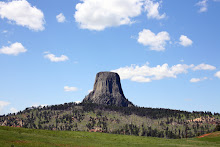
In the 1977 movie Close Encounters of the Third Kind, with its amazing ending at Devils Tower, Wyoming, there were many references to real incidents and situations, as well as subtle connections to UFOs, extraterrestrial visitation and other mysterious phenomena.
For example, the police chase across the Ohio-Indiana state line resembled real police incidents in that general region.
And interestingly, Wright-Patterson Air Force Base is also located near the Ohio-Indiana border. That base is home to an Air Force foreign technology research center and closely associated with the alleged Roswell incident and subsequent research.
In Close Encounters a mysterious red-suited team of 12 Americans is covertly sent to Devils Tower, a U.S. National Monument. That element parallels claims about a secret mission called “Project SERPO.”
According to reports about this allegedly real operation, 12 carefully selected and trained U.S. military personnel went on an exchange program in the 1960s with an extraterrestrial race aboard their spacecraft, staying on a faraway planet for more than a decade.
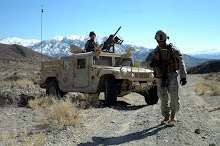
In Close Encounters the clandestine logistics and security operation at Devils Tower was largely facilitated by U.S. Army Special Forces.
In real life, some of their specialties are covert and unconventional operations. Army Special Forces also works in roles to establish rapport with indigenous populations and provide training.
But is there more about Devils Tower that we can learn?
BEAR’S LODGE
Native American Indians had a very different name for this unusual geological formation. To the Lakota and Cheyenne, it was “Bear Lodge,” “Grizzly Bear Lodge,” or “Bear Lodge Butte.” The Cheyenne and Crow also referred to it as “Bear’s House” or “Bear’s Lair.” It was also called “Bear’s Tipi” by the Cheyenne and Arapaho. To the Kiowa, it was “Tree Rock.”
How did an Indian identity associated with a bear lodge become “Devils Tower?” It is believed that an interpreter in an 1875 expedition in the area misunderstood the Indian words and translated them as “Bad God’s Tower” which was later changed to “Devil’s Tower,” and eventually to “Devils Tower” (no apostrophe).
President Theodore Roosevelt declared the huge rock formation a U.S. National Monument in 1906. Today, the entire monument area includes 1,347 acres.
Interesting legends and folklore about the site may also hold clues about more subtle connections at Devils Tower or Bear Lodge.
A Lakota tale reportedly describes six Lakota girls picking flowers there when they were chased by bears. The Great Spirit helped the girls by raising the ground under them. The distinctive vertical striations of the rock were made when the bears tried to climb it but slid down, leaving huge scratch marks, according to this legend.
A Kiowa story is similar. Seven girls playing were chased by large bears. To escape, the girls climbed a rock and prayed to the Great Spirit for help. Answering the girls’ prayers, the Great Spirit caused the rock to rise to the heavens, saving the girls as the bears tried to climb the rock, leaving their claw marks.
As the girls reached the uppermost realms of the sky, they became the star constellation the Pleiades. This star system is sometimes associated with extraterrestrial visitors in more modern cases.
There is another legend about several boys escaping a bear, praying to the Creator for help, being raised up on the rock and escaping back to their village with the help of an eagle.
ALIEN VISITORS
When Army Special Forces, scientists, technicians, defense and intelligence officials, and the mysterious 12-person team infiltrate the Devils Tower or Bear Lodge region in Close Encounters, can we make any connections to this Native American Indian lore or other possible factors?
Many Indian tribes have oral histories about unusual visitors or beings of many kinds. In some legends, the visitors come from far away in the skies. In others, certain beings are native to Earth, or live nearby, and are part of the mysteries of Nature and reality.
Even now, there are many reports of mysterious phenomena in Indian Country. And, Indian perspectives about Nature, the Great Spirit and other matters can be unique and helpful to learn about.
Another different type of link is the rich history in the U.S. Army of establishing connections to Native American tribes and traditions. Unit patches, words and concepts related to the identity and honor of a warrior can be found throughout the U.S. Army.
For example, the Army’s famed 101st Airborne Division uses the Cherokee word “currahee” as a touchstone concept. Currahee means “we stand alone together.”
The Army Special Forces motto, though not in American Indian language, is the Latin “de Oppresso Liber” meaning “Liberate the Oppressed.”
Of course, these two U.S. Army examples are paradoxical, to put it mildly, regarding the history of conflicts with Native American Indians over centuries as Europeans landed, conquered, took land, enslaved and destroyed or nearly destroyed native societies and cultures.
When the United States was formed and Europeans here became "Americans," regional militias and federal army troops often did the same.
In the case of the Cherokee, their ancient homeland in the Appalachian Mountain region stretched from Tennessee and North Carolina to Georgia and Alabama. Starting in the 1700s, there was a large degree of intermarriage with Scottish, Scots-Irish and English explorers and settlers, resulting in the millions of Americans today who have Cherokee DNA within them.
But this did not help them when in 1838 men, women, children and the elderly were forced at gunpoint and bayonet point from their homes and farms into prison camps, their land stolen, and marched to Oklahoma on the terrible and deadly “Trail of Tears.” Many mixed-ethnicity Cherokee were reportedly able to avoid this removal.
Their experience parallels the history of many other tribes.
Today, some researchers advise us to consider the experience of Native American Indians who faced a visitation or invasion of technologically superior “aliens” from England, France, Spain and elsewhere in Europe.
Could humans dealing with advanced beings from elsewhere experience a fate similar to that of American Indians?
Maybe we can take another look at Close Encounters in light of the history of Bear’s Lodge or Devils Tower. That location may serve as a way to explore the many lessons about connections between American history, humanity, Nature and the mysteries of the universe.
Sunday, October 31, 2010
‘Close Encounters’ Wyoming landing zone: UFOs, secret missions, American Indians
Wednesday, October 20, 2010
UFO disclosure has happened! Did you notice?
By Steve Hammons
(This article also appears on American Chronicle.)
Maybe it has happened with a whisper, not a major public announcement or event.
Maybe the tipping point was the recent publication of journalist Leslie Kean’s book UFOs: Generals, Pilots and Government Officials Go on the Record or a recent press conference by retired Air Force officers.
Or, it could have been the steady release of information through discreet ways via Hollywood movies, TV shows and other communications platforms over the past months, years and decades.
There will continue to be people who prefer to debunk the topic as well as those who aren’t quite ready to wrap their minds around the situation.
Who can blame them? It is strange, amazing and scary.
And, maintaining security about it over past decades has been, and continues to be a major element as we move forward. From all indications, it is a highly sensitive and complex situation.
As a result, there are many moving parts that must be handled in intelligent and careful ways.
AFTER DISCLOSURE PHASE
Yet, any normal person of average intelligence can review the information about this topic and easily figure out that something is going on in this area of scientific discovery.
It also seems to be a defense and intelligence matter that must be dealt with in serious ways.
We now seem to be in the period that could reasonably be called “after disclosure.”
Interestingly, a new book due out later this month is titled A.D. After Disclosure: The People's Guide to Life After Contact. Authors Richard Dolan and Bryce Zabel have written this comprehensive overview that explores nearly every angle of the historical, scientific, governmental, social, media-related, psychological and educational aspects of disclosure about UFOs, unusual visitors and related mysteries and challenges.
The book looks like it will be a useful tool and interesting reading for many people as they get up to speed on these important subjects.
The transition from subtle orientation and preparedness to the “after disclosure” phase may have been carefully coordinated since the post-World War II era. Dedicated people in the defense, intelligence and scientific communities reportedly worried that people might become overly fearful about new discoveries in this field.
As a result, safe and gradual acclimation and education efforts may have been implemented to enhance our psychological and emotional readiness. And, these activities probably have been successful.
The smooth transition to general public understanding about the situation seems to be in process now.
MOVING FORWARD
There are a lot of details. The situation is not simple. Trying to understand the many factors involved is going to be a learning curve involving our understanding of the universe’s hidden mysteries, human consciousness, Nature and other interesting elements.
Yet, isn’t it a relief to know that humans have at least reached a level of awareness about ourselves and the universe around us where we can accept various kinds of surprising and far-out emerging truths?
We don’t know it all and it’s probably not wise to listen to people who claim they do.
The “after disclosure” period will most likely involve ongoing communication, education, counseling and orientation. We have the resources to accomplish all of these missions successfully.
And, it’s quite possible that a lot of good things will come out of this phase of human development on Earth.
We might be able to utilize new technologies that improve our quality of life. Human suffering of many kinds might be mitigated by advanced knowledge. Earth’s biological environment and atmosphere could be better protected and enriched. Greater prosperity for all people could be achieved.
The advancement of humanity might make a quantum leap forward.
Or, maybe we will just put one foot in front of the other and make steady progress in ways that lead to a bright future on this beautiful planet, and beyond.
Monday, October 18, 2010
New commercial space planes compete with UFOs for suborbital flights
By Steve Hammons
(This article also appears on American Chronicle.)
Is there room in Earth’s orbit for both extraterrestrial spacecraft and a new wave of human commercial space planes and space stations?
UFO pilots will need to keep an eye out for a new generation of commercial space planes that will soon be taking passengers into space on suborbital trips above Earth’s atmosphere.
Recent developments point to increasing momentum for the commercial space activities industry.
Commercial spaceports have already been started and more are being considered in various international locations.
Just recently, Virgin Galactic's SpaceShipTwo space plane successfully completed a test flight over the Mohave Desert in southern California. It soared from an altitude of approximately 45,000 feet and landed safely at the Mojave Air and Space Port, the headquarters of Scaled Composites, the plane’s builder.
Meanwhile, another facility called Spaceport America in southern New Mexico is continuing to move forward. It boasts a state-of-the-art launch facility and has customers such as Virgin Galactic, Armadillo Aerospace, Lockheed Martin, UP Aerospace and Moog-FTS.
Canada is also considering construction of commercial spaceports, according to published reports. The Canadian Space Agency is reportedly considering Nova Scotia’s Cape Breton as well as Fort Churchill in Manitoba.
In addition, there are reports that the Caribbean island of Curacao could become a spaceport for suborbital flights of the Lynx rocket plane built by XCOR Aerospace. A South Korean spaceport is reportedly also being discussed by XCOR Aerospace.
JAMES CAMERON WEIGHTLESS
In another recent development, “Avatar” producer-director James Cameron went on a low-gravity flight on Oct. 9 called the ZERO-G Experience. Along with several other people associated with the X PRIZE Foundation, Cameron took the flight to help raise funds for the organization.
They took off from the Van Nuys airport in the Los Angeles area for the ride aboard the special plane owned by Space Adventures.
Cameron and his associates flew on a Boeing 727-200, the same kind used to train astronauts about reduced gravity. The plane flies 15 “parabolic arcs” to create zero gravity as well as the gravity on the Moon (1/6 of Earth) and Mars (1/3 of Earth).
The X PRIZE Foundation states that it has “a mission to create radical breakthroughs for the benefit of humanity” and that the foundation “is an educational nonprofit organization that creates and conducts large-scale, international prize competitions that stimulate investment in research and development worth far more than the prize itself.”
The group also states, “The X PRIZE Foundation conducts competitions in four prize groups: Education & Global Development; Energy & Environment; Life Sciences; and Space & Ocean Exploration.”
Dr. Peter H. Diamandis, chairman and CEO of the X PRIZE Foundation was also aboard the flight. He noted that, "Entrepreneurs and innovators are creating technologies which are making spaceflight affordable ... whether it is flying aboard a Zero-G flight, a suborbital flight into space, or a private flight to orbit.”
“On Saturday's weightless flight we gathered six X PRIZE Trustees and 20 philanthropists who believe we can use incentive prizes to drive radical breakthroughs for humanity," Diamandis stated. "The funds raised during this flight will help us design and launch audacious future X PRIZEs which will help humanity expand beyond the bounds of Earth."
Moviemaker Cameron pointed out that "The rapid acceleration of technology is enabling small teams to conduct exploration that was only possible by national governments. The X PRIZE Foundation helps to set and incentivize audacious and worthy targets."
BOOKING YOUR RESERVATIONS
When the suborbital space industry gets fully underway in the next few years, seats on the multi-hour flights are expected to cost about $200,000. However, those prices may come down as more competitors begin successful flight operations
But suborbital flights are not the only commercial space activities on the drawing board.
Boeing’s new CST-100 space capsule will have room for seven passengers and will be launched atop rockets now in development.
Space Adventures and Boeing have signed an agreement to explore commercial passenger trips on the CST-100. Space Adventures is also working with the Russian space agency and private Russian firms on commercial space travel opportunities.
The CST-100 is expected to take over many of the crew and cargo transportation missions previously conducted by the Space Shuttle, including trips to the International Space Station as well as new commercial space stations in low Earth orbit now being readied.
Space travelers and researchers may be able to book a flight aboard the CST-100 and make a round-trip home, or stay aboard new commercial space stations being developed by companies such as Bigelow Aerospace, a Las Vegas-based firm.
That company plans to offer lengthier stays in its low Earth orbit space stations for scientific researchers as well as other types of customers.
Bigelow Aerospace appears to be the leader in commercial space station development, using a special design acquired from NASA that uses a unique inflatable structure and sturdy, robust, high-tech materials to enhance safety.
The inflatable design also makes the space station modules light and compact to launch, creating various efficiencies.
What other advanced technologies are in the pipeline for commercial space stations, new spacecraft and suborbital space planes? We can only imagine.
Yet, it seems clear that commercial space travel is well on its way.
Within a few short years, a very active commercial space industry will be making trips into space that expand our opportunities and our perspectives about the universe and planet Earth.
Friday, October 15, 2010
Many factors in UFO reports, including ‘jellyfish’ appearance
By Steve Hammons
(This article also appears on American Chronicle and includes embedded links to related American Chronicle articles noted within.)
People who have sightings of unidentified flying objects (UFOs) sometimes report discs or saucers, V-shaped craft, triangles, glowing orbs and many other kinds of unusual things in the skies.
Sometimes the objects are said to appear metallic and other times an anomalous energy or light is reported.
One of the more unusual kinds of descriptions includes witness reports of something that appears like a “jellyfish.”
In recent days, this description has been used, and there have been other incidents when witnesses said a UFO looked like a "jellyfish," "octopus" or appearing to be something with "tentacles."
What are UFOs and why would they have such diverse appearance? Are they different kinds of technology or different kinds of phenomena altogether?
And, could any of these possibly advanced craft and the equally possible intelligent beings who might be associated with them help humanity and Earth?
DIFFERENT OBJECTS REPORTED
In the 1997 Phoenix lights case, at least one huge V-shaped or boomerang-shaped object with a dark surface and several bright lights was seen cruising slowly and silently over the city on the evening of March 13.
A gray-colored metallic disc-shaped object reportedly hovered at about 1,900 feet above Chicago’s O’Hare International Airport on Nov. 7, 2006.
And in other cases, a glowing “jellyfish” effect is seen by some witnesses.
A 2009 incident in Conisholme, England, included an object hovering near a wind turbine farm that the witness described as having “tentacles of light.” One witness stated it looked like a "massive ball of light with tentacles going right down to the ground. It was huge. With the tentacles it looked just like an octopus."
In a separate 2009 sighting, a Wimbleton, UK, witness said he saw something that appeared like "a large bright pink jelly-fish looking object surrounded by a pink haze."
During the multiple sightings in Stephenville, Texas, during 2008, a local peace officer viewed a UFO on police video and described it as looking like a "jellyfish."
This seemingly unusual jellyfish appearance has a logical and scientific explanation, according to researcher Ray Stanford. He says it is related to the propulsion system of certain advanced and exotic spacecraft that we call UFOs and Stanford calls "anomalous aerial objects (AAOs)."
Stanford is known as a pioneer in the study of UFOs using optical and electronic instrument systems and has been investigating this subject for decades.
He theorizes that the "jellyfish" visual effect could be a "magnetoplasmadynamic" or "magnetohydrodynamic (MHD)" field. The jellyfish appearance is not the actual object, Stanford says.
Additionally, Stanford says the tentacle-like appearance is "most often and readily visible when a craft is either slowing down or moving very slowly over an uneven surface” and indicates “constantly changing, torque-generating plasma beams."
More detailed information on his views about some of these specific issues are found in the Oct. 14, 2010, article "'Jellyfish' witness description of UFO significant?"
DEFENSE AND DISCLOSURE
Many researchers and possibly people in the defense community may have more knowledge about what UFOs are, how they appear and behave, and who might be involved with them.
But for average people, it may be unclear what the details are surrounding this mysterious though interesting subject.
Some advocates for more disclosure of information about UFOs say that some of the advanced technology involved could help the U.S. and humanity globally in many ways.
This question is explored in the Sept. 30, 2010, article "Can UFO-acquired technologies help the U.S. economy?" and the Oct. 8, 2010, piece "Space travel could advance with UFO technologies."
But are people in the U.S. and around the world mentally and emotionally prepared for more information or disclosure about UFOs? To some people, the answer is unclear. Would there be undue worry and anxiety about extraterrestrial visitors? And, is there actually something valid to worry about?
What kind of changes would occur in human society? These kinds of questions are being addressed certain movies and TV shows, such as NBC’s “The Event.”
A book due out this month will also explore relevant subjects. A.D., After Disclosure: The People's Guide to Life After Contact by Richard Dolan and Bryce Zabel is certain to get readers thinking.
The TV show and the book provide food for thought in the Oct. 2, 2010, article "Earth before 'The Event' and 'After Disclosure' worth discussing."
Importantly, how would our news media handle additional coverage of the UFO topic? Would they be responsible and professional journalists? Would they sensationalize or provoke fear and panic? Or, as may sometimes be the case, would they help in a cover-up of sorts?
The articles "Journalism evolving on leading-edge science, UFOs" (Oct. 7, 2010) and "Journalism tipping point: Media coverage of UFOs now serious" (Sept. 29, 2010) take a look at the dynamics of media coverage.
As we move forward and gain greater readiness and understanding about the interesting subject of UFOs, there may be many factors to consider and prepare for.
Sunday, October 10, 2010
New ideas, ancient views may explain UFOs, odd phenomena
By Steve Hammons
(This article also appears on American Chronicle.)
There seem to be many indications that modern humans are discovering or rediscovering knowledge and understanding that were known to ancient people.
One example might be the research into extrasensory perception (ESP). The operational intelligence "remote viewing" activities conducted by the U.S. program known as Project STAR GATE provided solid evidence that humans do have a “sixth sense.”
Historically, other cultures have also believed that humans can perceive information from within, using what we might call intuition, instinct, gut feelings or visions.
For example, Native American Indians had “vision quests” and other kinds of activities to help them perceive in different ways. Dreams and other non-logical perceptual experiences were thought to sometimes contain valuable information as well.
Another possibly-related field of investigation is the inquiry into concepts about multiple dimensions in our universe.
OTHER DIMENSIONS NEARBY
One idea of how the universe might be structured is called the “Calabi-Yau space.” It has been described as somewhat resembling a crumpled-up and folded-up piece of paper.
In this concept, time and space as well as other aspects of the universe twist and turn, and even fold back upon one another. Multiple dimensions – many of which we cannot easily perceive – are nearby.
This view could explain unusual phenomena that we sometimes refer to as anomalous, metaphysical or even paranormal. They might actually be normal.
Certain ideas about the movement between dimensions seem more feasible when looking at a visual representation of the Calabi-Yau space concept.
A close proximity of other dimensions folding upon or bumping into one another might help explain odd unidentified flying objects (UFOs) and reports of beings and creatures who may cross boundaries of one dimension into another and back again.
The nonlinear view of space also can apply to time as well as other elements of life.
Things we see and experience might have multiple connections in multiple ways, some of which don’t always make logical sense to us.
This nonlinear concept is also common to Native American Indian cultures. These nonlinear views of Nature and the universe sometimes include the circle or cyclical.
According to the Oklahoma Historical Society’s Encyclopedia of Oklahoma History & Culture, “As nonlinear people, Indians are cyclical by nature. Day changing into night is a cycle, the full moon's monthly repetition is another cycle, and the seasons rotate as well. Nonlinear reality is a powerful theme in the Oklahoma Indian experience.”
PERCEPTUAL SYNERGY
However, in light of new theories about physics, even the circular or cyclical view of reality may be overly simplified.
Lakota philosopher, historian, speaker, broadcaster and musician Tiokasin Ghosthorse has noted that Native American Indians, the first people of the Americas, accept the many interesting aspects of Nature and the universe.
Dealing with unconventional intelligent beings who may visit from time to time, different modes of human perception, alternative views of time and space, and acceptance of the universe as a mysterious place are part of this perspective, Ghosthorse has said.
Here in North America, we are uniquely positioned to tap into this ancient viewpoint about the nature of reality and the nature of Nature. Many people in North America have mixed genetic backgrounds that include varied European, African and Native American Indian DNA.
These backgrounds could be helpful in creating a synergy of understanding by merging many perspectives and histories to come up with a new paradigm of reality.
With new theories of physics and mathematical formulations trying to explain the universe emerging alongside our ancient experiences and knowledge, we might soon discover a more accurate understanding of the world around us and within us.
Friday, October 8, 2010
Human space travel could advance quickly with UFO technologies
By Steve Hammons
(This article also appears on American Chronicle.)
Early American and Russian efforts at space travel in the 1960s are now a distant memory for many people around the world.
Those pioneering astronauts and cosmonauts risked their lives in tiny capsules just getting into Earth orbit and returning safely.
Now, decades later, we now find ourselves near the end of the Space Shuttle era and ready to take the next steps with new approaches to space activities and exploration.
Meanwhile, some people speculate that behind the scenes, the U.S. may have already developed highly-advanced spacecraft that are top secret. These spacecraft, if they exist, and like other classified military aviation projects, could be years or decades in advance of where the public thinks we are technologically.
There are tales of secret U.S. spacecraft that have capabilities far beyond the Space Shuttle. They patrol the outskirts of Earth’s atmosphere and can make interplanetary journeys using advanced propulsion systems and scientific knowledge, according to this kind of far-out speculation.
WRIGHT BROTHERS TO ROSWELL
There are also rumors that some of this technology could be quite exotic and was acquired or learned about from crashed extraterrestrial spacecraft or some other contact with extraterrestrial beings. This theory does stretch the imagination and is understandably difficult for many people to believe.
But, is it really so far-fetched?
Looking at the body of research about UFOs and alleged extraterrestrial visitation to Earth and trying to separate the silly from the serious, it does seem at least remotely possible that “foreign” technologies related to anti-gravity propulsion, energy generation, materials, engineering, electronics and a different understanding of physics could have been obtained by humans.
If we consider the possibility, just for the sake of interesting discussion, that humans could have acquired crashed “flying saucers” or other kinds of advanced spacecraft beginning back in 1947 or so, wouldn’t that technology have been fascinating and important for defense, aviation and scientific experts?
Wright-Patterson Air Force Base in Dayton, Ohio, has long been a major center for the analysis of other countries’ aircraft and would have been a logical place for engineers to examine this completely different kind of foreign technology.
And, of course, as the Roswell incident story goes, crashed UFOs were taken to Wright-Patterson AFB.
Isn’t it also interesting that Dayton – the town where Orville and Wilbur Wright used their knowledge about bicycles and other mechanical devices to build and fly their airplane in 1903 – could have been the site where extraterrestrial flying craft were also examined?
That almost seems to take us full-circle, from the Wright Brothers to early space programs to the rapidly-advancing progress in aviation and space activities today, including speculation about UFOs, extraterrestrial spacecraft and secret advanced U.S. space activities.
HUMAN ADVENTURES
But maybe a circle is not the right metaphor to describe human advancement in space travel, overall technological progress and our understanding about humanity’s place in the universe.
After all, this story is not over. It is still unfolding. It seems to be on some kind of trajectory that is challenging to imagine. What will the future bring for humanity in our exploration of space?
Undoubtedly new knowledge and understanding will continue. New theories about how the universe works are already creating mind-expanding paradigms about multiple dimensions as well as different views of time and space, matter and energy, science and spirit.
And space travel will continue to be a key part of scientific and technological progress as well as help us get a better viewpoint about Earth and humanity. From up in low Earth orbit, or even from a perspective further away, this small blue planet seems like a wonderful lush oasis.
If only we could make our planet really so wonderful in all ways for all humans and the other diverse plant and animal life here. We have a way to go in that regard.
As we step back, or out, through space travel, we surely will continue to get an expanded consciousness and a better understanding of ourselves and Earth.
And soon, more people will have this opportunity. A company called Space Adventures is already planning to book seats on Boeing’s new CST-100 spacecraft that will transport crew and cargo to the International Space Station and new commercial space stations being developed. These commercial space stations will also allow guest astronauts to enjoy extended stays in low Earth orbit.
What other kinds of space adventures might be coming our way? How big is your imagination?
So, the journey from Orville and Wilbur’s bicycle shop in Dayton to wild theories about UFO visitation continues.
Whether we are talking about conventional spacecraft and space stations or highly unconventional spacecraft piloted by extraterrestrial and/or inter-dimensional visitors, the future looks interesting indeed.
The seemingly endless universe around our planet is still a huge mystery in many ways, even though human knowledge has advanced tremendously. And here on Earth, amazing discoveries about Mother Nature also continue to further our understanding.
Even closer to home for all of us, the human mind and human consciousness may be one of the biggest mysteries of all, and be the source for great new discoveries.
Human consciousness cannot be looked at separately from these other scientific advancements and possibilities. Because we are part of this universe, part of the mystery and the adventure of discovery.
Monday, October 4, 2010
Commercial space travel: New perspectives for humanity
By Steve Hammons
(This article also appears on American Chronicle.)
Will the human species continue to gain greater insight and new perspectives about planet Earth and the universe as we enter the new era of commercial space activities?
It looks like we will be finding out in the near future. Commercial space travel continues to move forward with the recent announcement by Boeing that it will partner with a firm called Space Adventures.
Boeing’s Crew Space Transportation-100 (CST-100) capsule, in development now, is envisioned as having room for seven passengers and Space Adventures will help promote, market and sell seats aboard it. The capsule should be ready for launch in 2015.
The CST-100 will be boosted into low Earth orbit by privately-built rockets and is planned to provide transportation for astronauts and cargo to and from the International Space Station (ISS) as well as private, commercial orbiting space stations.
Soon, many more people will have the experience that has primarily been the domain of American astronauts and Russian cosmonauts.
Growing commercial space activities will likely open doors to new understanding about Earth and, as many astronauts and cosmonauts have said, a deeper and more profound view of the human race and life on “the blue planet.”
COMMERCIAL SPACE STATIONS
Boeing has also teamed with Bigelow Aerospace, a Las Vegas-based company that has acquired NASA-designed concepts for expandable, flexible-hulled habitat modules that will be used in low Earth orbit space stations or, eventually, even as stations on the moon.
Bigelow Aerospace has already successfully launched two smaller-scale prototypes and plans to have a station in orbit by 2014 or 2015.
They plan to market and sell time on the space stations for a variety of potential clients. Their website explains, “Whether you are a sovereign nation developing an astronaut program, a corporation interested in microgravity research, or an individual with a desire to experience space, we can help you achieve your goals."
Using multiple layers of Vectran (twice as strong as Kevlar) for the outer shell of the modules, Bigelow Aerospace notes that this design is safer than conventional hard-hulled spacecraft when it comes to any contact with space debris. The Vectran design has been robustly tested and stands up to significant impacts with little or no damage.
The inflatable design is also more efficient to launch due to reduced size and weight.
Space Adventures is also planning to play a role in booking stays at orbiting space stations. They have an agreement in place with two Russian companies, RSC Energia and Orbital Technologies, which also plan to build an orbiting space station currently being referred to as the Commercial Space Station (CSS).
NEW KNOWLEDGE, EXPERIENCES
What will the clients of commercial space activities encounter? Certainly the experience of microgravity and looking out a window at the beautiful planet below, over the Earth’s horizon and into space will be life-changing for many passengers on the CST-100 and orbital space stations.
Media and communication projects following these developments could allow millions of people to share the experience of being in low Earth orbit and appreciate new perspectives of our precious planet and the life it provides for us.
Additionally, scientific and manufacturing research can be conducted in microgravity to yield new discoveries and progress.
And, as some astronauts and cosmonauts have reported, sometimes unconventional unidentified phenomena might be seen or experienced out in space. These situations could also provide commercial space travelers greater understanding and an even more exciting adventure.
The technological requirements and advancements involved in commercial space travel will undoubtedly ripple through our economy and society, affecting us here on Earth too, just as NASA similarly triggered many kinds of scientific and technical progress during past decades.
But, ultimately, some of the most significant outcomes of commercial space activities may be the appreciation of our simultaneously resilient and fragile planet, our attempts to comprehend the much larger picture of Earth’s vastly diverse plant and animal life, and trying to learn more about our place in this mysterious cosmos.
Saturday, October 2, 2010
Earth, humans before ‘The Event’ and ‘After Disclosure’ are worth discussing
By Steve Hammons
(This article also appears on American Chronicle.)
The new NBC TV series “The Event” and the upcoming book A.D. After Disclosure: The People's Guide to Life After Contact both appear to trigger constructive and necessary thinking about the effects that unconventional developments might, or will have on the U.S. and societies around the world.
As we learn more about the possibility or probability that we are being visited by intelligent beings from elsewhere, possibly aboard a UFO we may see from time to time, responsible people must consider the impacts on our people and human cultures globally.
To maintain reasonable stability in the face of surprising situations, leaders at many levels may want to update their information about changes that could occur gradually or quite suddenly.
As TV viewers who have watched the first two episodes of “The Event” know, extraterrestrials or a kind of somewhat-human intelligent beings arrived on Earth and in the U.S. quite a while ago. Some were detained by U.S. government authorities and some discreetly merged into American society.
Since the book A.D. After Disclosure is currently being readied for publication in mid-October, we don’t yet know exactly what researchers and authors Richard Dolan and Bryce Zabel will present to us about possible scenarios after humanity learns about some of the details of extraterrestrial activities on Earth.
UNKNOWN CHANGES
The NBC series writers are telling us that the simple, though profound, news that extraterrestrials or some other kind of unusual beings have been visiting Earth is not really “the event.”
People who have researched leading-edge scientific developments suggest that there could be a whole range of interesting changes.
Human consciousness itself could evolve, with the emergence of a more clear awareness of the deeper connections within our minds and souls. The physics of Nature around us might also change, and the underlying energy of the Universe might emerge in some new kind of way.
TV writers, various researchers and theoretical physicists might be equally puzzled. But, they also might have some valid views about the possible scenarios that could surface.
And if human civilization on Earth undergoes significant changes “after disclosure,” the changes might not be limited to simply the knowledge that humans are not alone in the Universe, but rather that the Universe itself is something much different than what we were taught in school.
The ideas that several kinds of extraterrestrials or inter-dimensional visitors could be moving in and out of our world via UFOs or other means and that we, ourselves, are different than we thought, are certainly more challenging to understand than just an announcement that we have made contact with another planet’s intelligent beings.
HUMAN NATURE
Many people seem to believe that if only the secret departments of the U.S. government would tell us what they know, it would be easy to adjust and figure out the rest of the story. This may not be true. To assume that government officials or others have the full picture could be an error.
It does appear reasonable to speculate that certain top secret research might have acquired some solid information that sheds light on the situation at hand.
But, do they have all the answers? Do they even know the right questions?
There is a mystery facing humanity. Some people frame it in scientific terms and others look at big questions from a spiritual perspective. Yet other people try to understand life through relationships with their families, friends and fellow humans. And others look to Nature around us for clues about life and reality.
Certain considerations might resonate for us as we think about the possibilities that could accompany significant change in our normal day-to-day lives and viewpoints. What is a good way to continue on a path that saves the best of human society, while moving forward on new knowledge and opportunities?
The often-cited example of what happened to Native American Indians in the Americas when technologically-superior Europeans arrived seems like a valuable lesson. As we know, many of the culturally and spiritually rich Native American Indian societies were destroyed while others barely survived.
How would modern-day humans make out in a similar situation?
There certainly are elements of human civilization that would be wise to leave behind if we can: poverty, injustice, disease, human suffering, destruction and pollution of Earth’s natural environments, and similar circumstances.
Still, much of the music, art, beauty, cultural aspects and other accomplishments of human civilization should be valued and cherished.
Maintaining the compassion, kindness, creativity, curiosity and similar valuable parts of our human nature also seems important as we move forward, possibly in the face of unusual changes or disclosures.
The NBC show “The Event” and the book A.D. After Disclosure may give us some guidance, or at least get us thinking about what unique and surprising scenarios could emerge, and how we might respond to them.